
Tool Factory Long blade
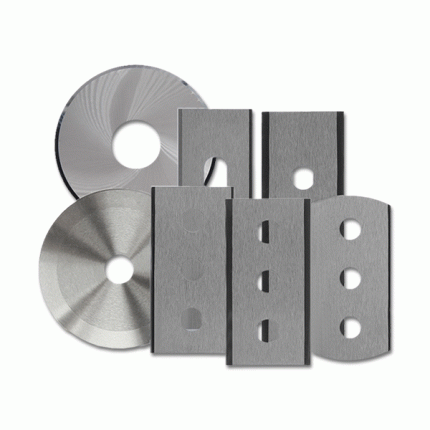
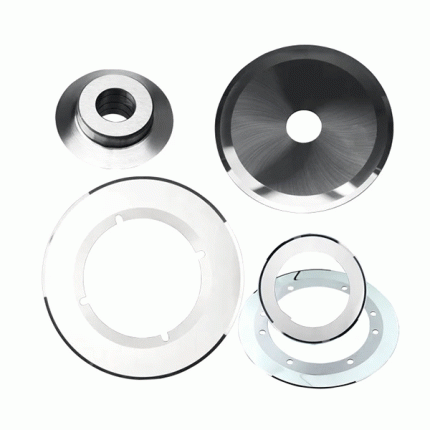
Industrial Grade Tungsten Carbide Circular Blades For Precise Strip Cutting Durable And Suitable
Tungsten steel round blades are usually made from high-quality tungsten carbide alloy (mainly composed of tungsten carbide and cobalt) through powder metallurgy process. 。 This process endows the blade with extremely high hardness, wear resistance and thermal stability, making it highly suitable for high-speed and precise cutting operations. It is applicable for cutting metals, plastics, composite materials and other hard materials. Depending on the shape and design, common tungsten steel round blades include flat round blades and toothed round blades, etc.
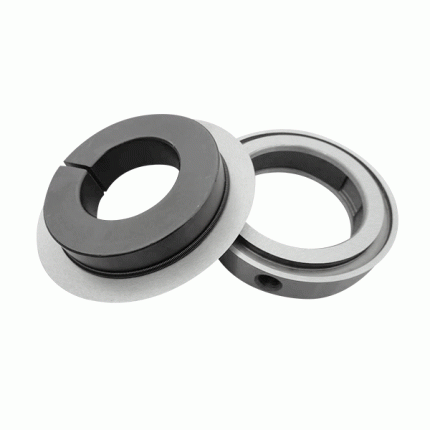
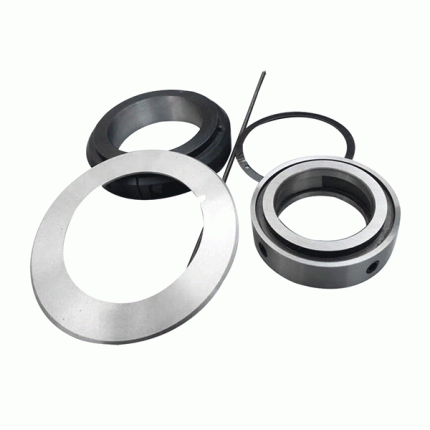
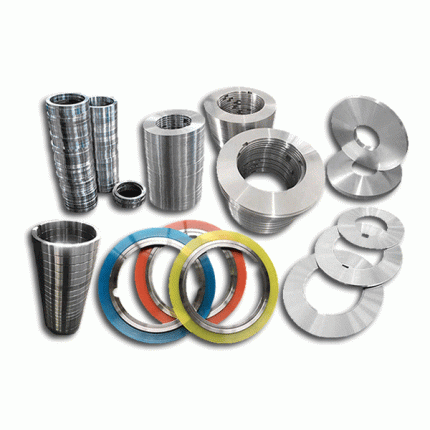
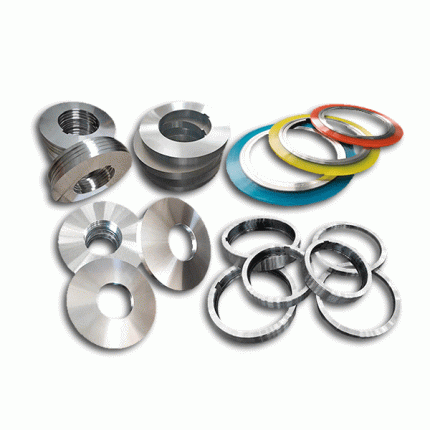
Precision Rotary Shear Knife Circular Slitting blade Used for metal processing
The Rotary shear blades , also known as the strip divider blade or the rolling shearing machine blade, is the core cutting tool for the thin sheet metal shearing process. Through the rotation and shearing of the upper and lower blades, wide rolls of material can be precisely cut into narrow strips of specific widths. They are usually composed of three parts: the blade, the spacer sleeve, and the spacer ring. Their diameters range widely, from 100mm to 2000mm, to meet different processing requirements - larger diameter blades are mostly used for heavy-duty sheet metal processing, while smaller diameter blades are suitable for precise cutting. They are widely used in metal processing, automotive manufacturing, and electronic and electrical industries.
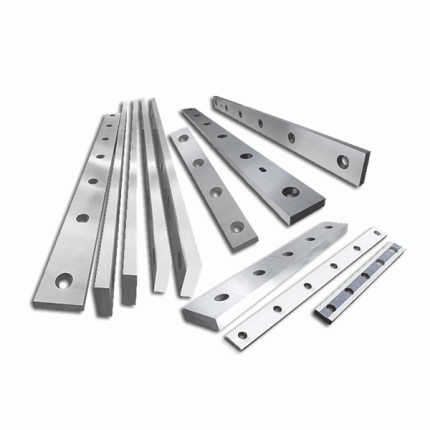
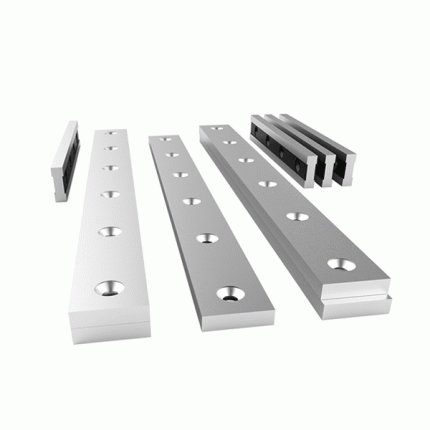
Steel Plate Shearing Machines Blades Manufacturer for Metal Guillotine Long Knives
The shearing machine blade is the core cutting component of the shearing machine, consisting of an upper blade (moving) and a lower blade (fixed). By adjusting the blade gap reasonably, it applies cutting force to the metal sheet to achieve precise cutting of straight edges. Its working principle is based on the mechanical structure of forging machinery and is widely used in industries such as light industry, aviation, shipping, metallurgy, electrical appliances, and stainless steel products.