
Blog
Industrial Blade Materials Guide: Choosing the Right Blade for Your Application

Selecting the correct blade material is critical for achieving optimal performance, longevity, and cost-effectiveness in your operations. This guide details the properties, advantages, and typical applications of common industrial blade materials to help you make a scientifically informed choice.
To quickly compare the primary materials we offer, here is a summary table:
|
Material Type |
Typical Hardness (HRC) |
Key Advantages |
Limitations |
Ideal For |
|
High-Speed Steel (HSS) |
60-68 |
Excellent toughness, good wear resistance, cost-effective. |
Lower wear resistance than carbide, requires more maintenance. |
General-purpose metalworking, woodworking, plastic cutting. |
|
Tool Steel (e.g., SAE1095) |
58-62 (Hardened) |
High strength, excellent wear resistance, good sharpness. |
Less resistant to high temperatures than HSS or Carbide. |
Springs, hand tools, scrapers, industrial cutters. |
|
Carbide / Tungsten Carbide |
60-65 (Blades) |
Exceptional hardness & wear resistance, high heat resistance. |
Brittle, higher cost, complex manufacturing. |
Hard materials, abrasive non-ferrous metals, high-volume production. |
|
Stainless Steel |
Varies (e.g., 420, 440) |
Excellent corrosion resistance, durable, hygienic. |
Generally not as hard as tool steels or HSS. |
Food processing, medical instruments, wet environments. |
|
Ceramic |
N/A (Extremely Hard) |
Superior edge retention, corrosion resistance, hygienic, lightweight. |
Fragile, limited cutting capacity, higher cost. |
Precision cutting in specific industries (e.g., textiles, packaging). |
1. High-Speed Steel (HSS)
High-Speed Steel is a superior ferrous alloy engineered to maintain its hardness and cutting ability even when heated to high temperatures (up to approximately 1100°F or 593°C) . This “red-hardness” allows it to operate at higher cutting speeds than traditional tool steels.
- Composition:Alloyed with elements like Tungsten (W), Molybdenum (Mo), Chromium (Cr), Vanadium (V), and sometimes Cobalt (Co) . Common grades include M2, M42, and D2 .
- Key Properties:
High Strength and Toughness: Resists chipping and impact better than more brittle materials like carbide, making it suitable for intermittent cuts .
Good Wear Resistance: Performs well against a wide range of materials.
Cost-Effectiveness: Offers a excellent balance of performance and price, and is easier to manufacture than carbide blades .
- Advantages:Versatile, tough, good for high-speed operations, cost-effective for many applications.
- Limitations:Lower wear resistance than carbide, requiring more frequent sharpening in demanding applications .
- Ideal For:A very wide range of applications, including metalworking (bars, tubes), woodworking, cutting plastics, and general fabrication . It’s a great all-rounder.
2. Tool Steels (e.g., SAE1095, 9CrSi, Cr12MoV)
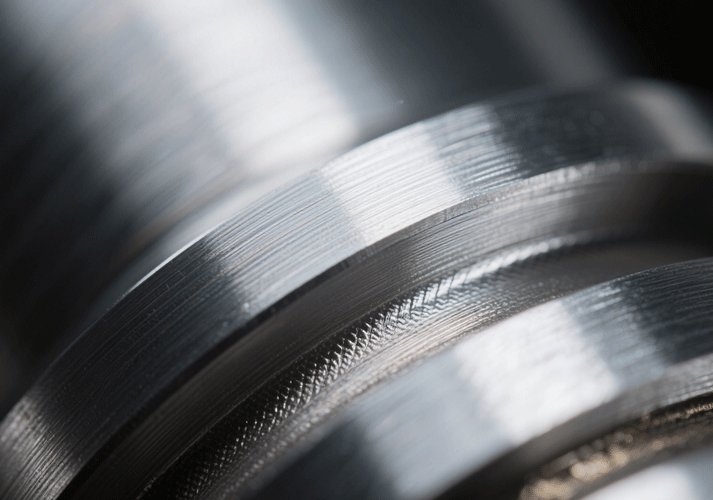
This category encompasses a range of carbon and alloy steels known for high hardness, strength, and wear resistance. The specific grade must be chosen based on the material being cut .
- Composition:Varies by grade. For example:
SAE1095: A high-carbon steel (C 0.90–1.03%) with minimal other alloys, known for high hardness and edge retention .
9CrSi / Cr12MoV: These are alloy tool steels containing Chromium (Cr), which significantly enhances hardenability, wear resistance, and toughness .
- Key Properties:
High Hardness & Wear Resistance: Heat-treated to achieve high hardness (e.g., SAE1095 to 58-62 HRC) .
Strength: Can withstand significant cutting forces.
- Advantages:High strength, excellent wear resistance, good sharpness, and can be more cost-effective for certain applications than HSS or Carbide.
- Limitations:Generally less resistant to high temperatures than HSS or Carbide.
- Ideal For:
SAE1095: Razor blades, band saw blades, hand tools, scrapers, and mechanical springs .
9CrSi / T10: Shearing ordinary low-carbon steel plates and scraps .
Cr12MoV / 6CrW2Si: Shearing hot-rolled plates, stainless steel, and medium-thick plates .
3. Carbide (Tungsten Carbide)
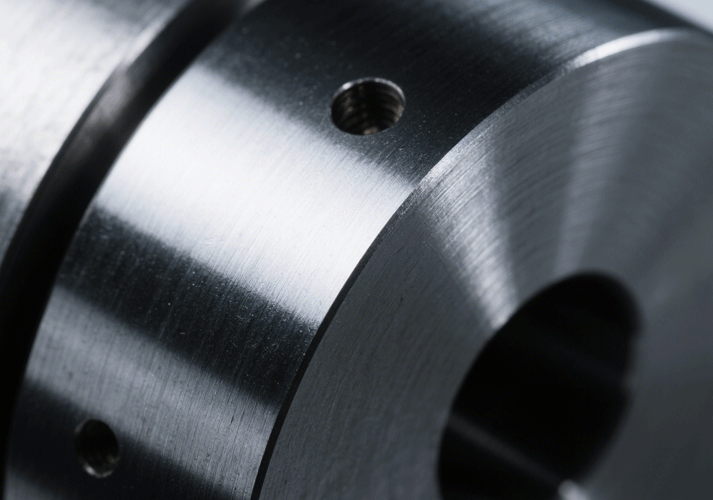
Tungsten Carbide is a composite material made from hard tungsten carbide particles bonded together by a metallic binder, usually cobalt. It is one of the hardest materials used for industrial cutting .
- Composition:Tungsten Carbide particles in a Cobalt matrix.
- Key Properties:
Exceptional Hardness & Wear Resistance: Extremely resistant to abrasion, often lasting 5-80 times longer than HSS tools .
High Heat Resistance: Maintains hardness at temperatures up to 1000°C .
- Advantages:Superior wear life, excellent for high-volume production, maintains precision over time, can cut harder materials.
- Limitations:Brittle – more prone to chipping or breaking from impact or vibration. Higher initial cost and more complex to manufacture .
- Ideal For:Cutting abrasive materials (e.g., fiberglass, composites), hard metals, non-ferrous metals (e.g., aluminum, copper), and applications demanding long life and minimal downtime . Often used as tipped blades (e.g., TCT – Tungsten Carbide Tipped) where only the cutting edge is carbide, providing a balance of performance and cost .
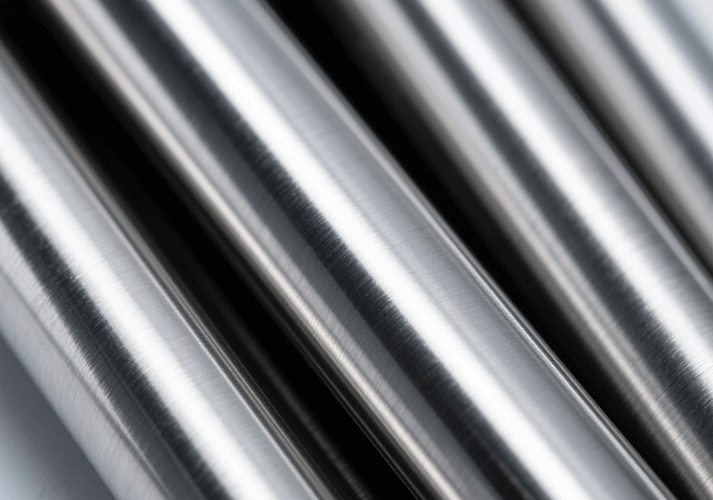
4. Stainless Steel
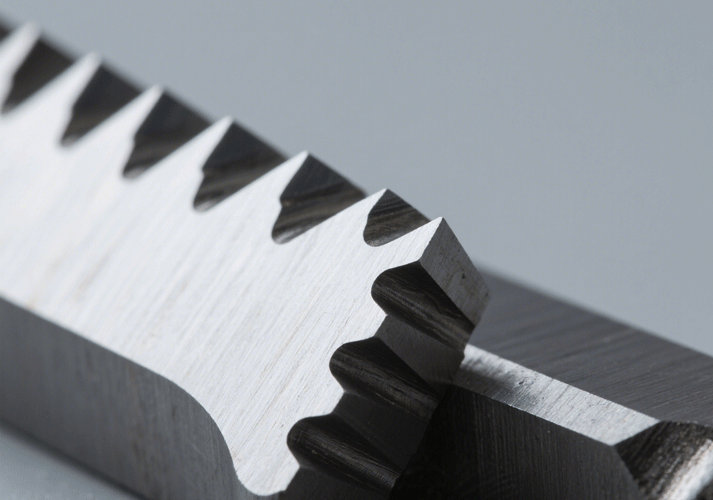
Stainless steel is chosen primarily for its corrosion resistance, making it essential for applications where moisture and cleanliness are concerns.
- Composition:Iron alloyed with a minimum of 10.5% Chromium, which forms a protective passive oxide layer. Common types for blades include 420 and 440 series.
- Key Properties:
Corrosion Resistance: Excellent resistance to rust and staining.
Durability and Hygiene: Easy to clean and sterilize.
- Advantages:Excellent corrosion resistance, hygienic, durable.
- Limitations:While capable of achieving high hardness (e.g., 440C can reach 58-60 HRC), it generally does not match the wear resistance of tool steels or HSS in dry, high-abrasion applications.
- Ideal For:Food processing blades (cutting, slicing, packaging), medical and surgical instruments, and any application in wet or corrosive environments .
5. Ceramic
Ceramic blades are made from advanced ceramic materials like Aluminum Oxide or Zirconium Dioxide. They are known for retaining an extremely sharp edge for a long time.
- Composition: Materials like Aluminum Oxide (Al₂O₃), Silicon Nitride (Si₃N₄), or Zirconium Dioxide (ZrO₂) .
- Key Properties:
Superior Edge Retention: Stays sharp significantly longer than steel blades.
Corrosion Resistance: Inert and resistant to corrosion.
Lightweight: Lighter than steel blades.
- Advantages: Long-lasting sharpness, corrosion resistance, hygienic, lightweight.
- Limitations: Fragile – susceptible to chipping or breaking if dropped or used on hard, irregular materials. Not suitable for prying or heavy-impact tasks. Higher cost .
- Ideal For: Precision cutting of specific materials like textiles, plastics, and packaging films where a sustained ultra-sharp edge is critical .

How to Choose: Key Selection Factors
- Material to be Cut:This is the most important factor. Match the blade material to the hardness and abrasiveness of your target material (see table and descriptions above).
- Operation Type:Consider if the cut is continuous or intermittent. Tough materials like HSS handle impact and vibration better than brittle carbide .
- Production Volume & Cost-Per-Part:For high-volume production, the longer life of carbide may justify its higher initial cost. For lower volume or general use, HSS or tool steel may be more economical.
- Operating Environment:Presence of moisture, chemicals, or high heat will steer you towards stainless steel, ceramic, or carbide respectively.
- Equipment Compatibility:Ensure your machinery has adequate power and rigidity for harder blade materials like carbide.
We Are Here to Help: Choosing the right material is complex. As a factory, we have the expertise to guide you. We offer custom blade solutions and can advise on the optimal material, heat treatment, and geometry for your specific application.
Contact us today for a personalized recommendation and quote. Let our manufacturing expertise solve your cutting challenges.