
Blog
Packaging Industry: Innovation in Shearing Blade Technology and Its Application Prospects

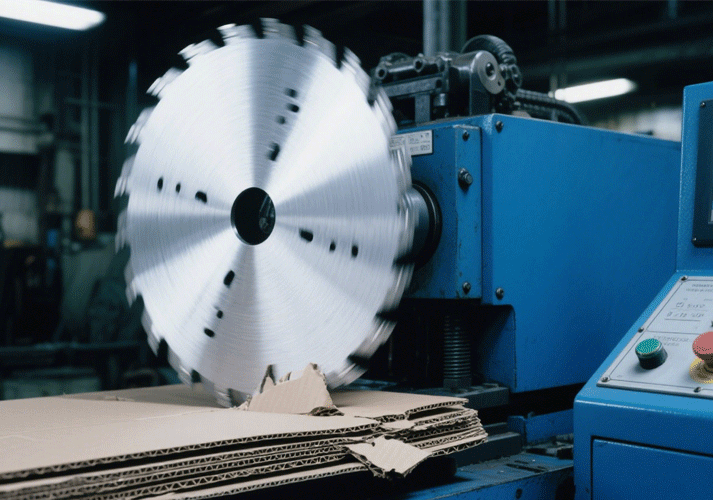
1 Shearing Blades: Precise Tools in the Packaging Industry
Shearing blades, as the core component in the packaging production process, directly determine the cutting quality, production efficiency, and cost control of packaging materials. Shearing blades are precision metal cutting tools that are widely used in the shearing processing of various materials such as paper, plastic, film, and composite materials, thanks to their high precision, wear resistance, and corrosion resistance. They play a crucial role in industrial production.
In the packaging industry, shearing blades can be classified into various types based on materials, shapes, and applications. According to the application field, they can be divided into general-purpose shearing blades and specialized shearing blades; according to the production process, they include cold-rolled shearing blades and heat-treated shearing blades, etc. Different types of shearing blades meet the precision and efficiency requirements of the packaging industry for various material processing.
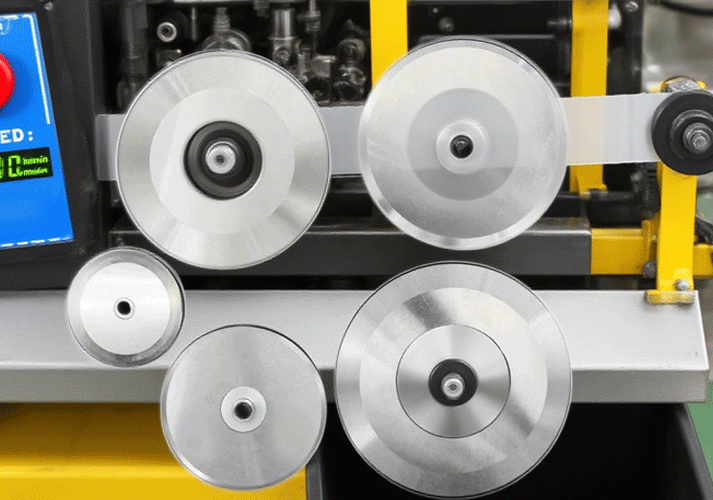
2 Material Science: The Core Foundation of Shearing Blade Technology
The performance of shearing blades largely depends on the materials they use. Different material characteristics are suitable for different shearing scenarios and requirements.
2.1 Hardness and Wear Resistance: The Foundation of Shearing Precision
The hardness of the upper blade in shearing directly determines its ability to resist plastic deformation and wear. High-speed steel (HSS) blades, after heat treatment, can reach hardness levels of HRC58-60, suitable for shearing of high-gauge copperplate paper, stainless steel, etc., maintaining sharp edges during shearing and reducing burrs and size deviations caused by blade wear.
Tungsten carbide blades have higher hardness (HRC85-92), but are more brittle, suitable for precise shearing scenarios such as lithium battery electrodes, optical films, etc., which require extremely smooth surfaces. These types of blades can ensure stable cutting performance during high-speed shearing and reduce the frequency of machine stops for blade replacement.
2.2 Toughness: The Key to Impact Resistance
Toughness is the ability of the blade to absorb energy and resist fracture when subjected to impact loads. In shearing thick materials or those with uneven hardness, the blade needs to have sufficient toughness to avoid chipping. For common composite materials or paper products with varying thicknesses in the packaging industry, tough blades can adapt to the challenges brought by material inhomogeneity, ensuring the continuity of the shearing process.
2.3 Chemical Stability: The Guarantee of Corrosion Resistance
The chemical stability of the blade material in humid or corrosive environments directly affects its service life. Stainless steel blades (such as 304, 316L) form a dense oxide film by adding chromium (Cr) and nickel (Ni), effectively resisting acid and alkali corrosion, suitable for shearing in fields such as chemical raw materials and pharmaceutical packaging. This material can resist erosion by chemical substances in the packaging production environment, extending the service life of the blade.
2.4 Coating Technology: An Important Path for Surface Strengthening
In addition to the selection of basic materials, surface coating technology has also become a key means to enhance the performance of the cutting blades. By depositing coatings such as TiN and TiAlN through physical vapor deposition (PVD) technology, the wear resistance can be improved while maintaining the sharpness of the cutting edge. This “high-speed steel + coating” composite blade solution performs exceptionally well when cutting soft materials such as PET films and PE foams, enabling “shearing” cutting and reducing material stretching deformation.
The coating technology not only increases the surface hardness of the blade but also reduces the friction coefficient between the blade and the material, minimizing the impact of cutting heat on the material’s performance. This is particularly important for the cutting of heat-sensitive packaging materials.
3 Technological Innovation: Intelligent and Automation-driven
The cutting blade technology is undergoing unprecedented innovation and leapfrogging, mainly reflected in the following aspects:
3.1 Innovative Application of Materials Science
The development and application of new materials provide more excellent performance for the cutting blades. The application of new materials such as ceramics and diamonds enables disc cutting blades to have higher hardness and wear resistance. Blades made of ceramic materials have a lifespan 3-5 times longer than traditional steel blades due to their outstanding performance, and have been widely used globally in industries such as papermaking, plastic, and metal processing.
Significant progress has also been made in the research and application of nanocomposite materials, which can significantly improve the performance of the blades, extend their lifespan, and reduce the frequency of replacement. The advancement of materials science enables cutting blades to adapt to higher speeds and greater precision requirements for cutting.
3.2 Development of Intelligence and Automation
With the deep integration of intelligent and automation technologies, the cutting machine industry is gradually moving towards a new era of intelligent production. By integrating advanced control systems and algorithms, cutting machines can achieve more complex and variable cutting path planning, ensuring that each cut is carried out accurately and precisely according to the preset trajectory.
The intelligent cutting control system can monitor and adjust various parameters during the cutting process, such as speed, force, and angle, to achieve the best cutting effect and further enhance production efficiency and product quality. For example, a company has developed an intelligent disc cutting blade that uses built-in sensors to monitor various parameters during the cutting process, such as cutting speed and pressure, to achieve intelligent control of the cutting process.
3.3 Enhancement of Precision Processing Technology
The optimization and innovation of processing techniques are also important directions for the development of cutting blade technology. By introducing 5-axis CNC processing technology, complex shapes of the blade can be processed with high precision, improving production efficiency and product quality. Additionally, the research and application of micro-nano processing technology help produce more precise and high-quality blades, meeting the needs of the high-end market.
The advancement of precision processing technology has enabled the precision of cutting blades to reach an unprecedented level. For example, some high-precision cutting blades can ensure a thickness tolerance of ±0.0005mm and a surface roughness of Ra0.1μm, providing reliable guarantees for the production of high-end packaging products.
4 Application Prospects: Diversified Market Demand Drives Growth
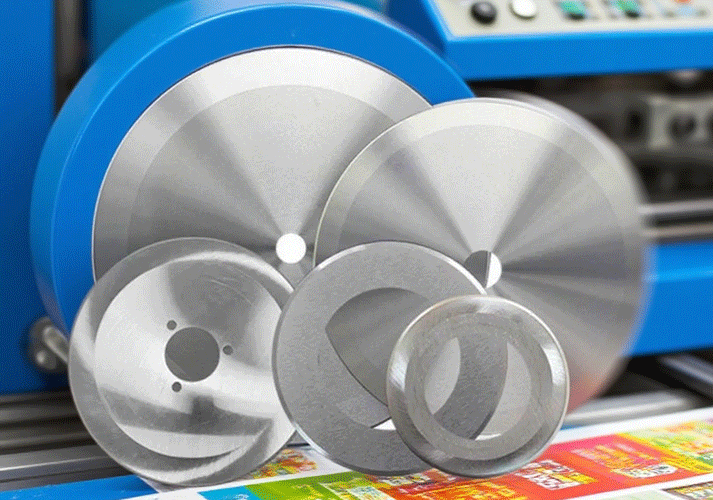
4.1 Continuous Growth in Market Demand in the Packaging Industry
With the rapid development of China’s economy, the market demand for the packaging industry continues to grow. Industries such as food, medicine, cosmetics, and electronics have a large demand for packaging products and exhibit a trend of diversification and high-endization. In particular, the food industry, with the increasing demands of consumers for food safety and quality, is increasingly demanding high-quality and high-value packaging materials.
The rise of e-commerce has also driven the market demand for packaging, with potential in sub-sectors such as courier packaging and gift packaging. This trend places higher requirements on cutting blades, requiring them to adapt to various materials, different thicknesses, and special cutting requirements.
4.2 Technological Innovation Drives Industrial Upgrading
The continuous innovation of slicing blade technology will drive the packaging industry towards higher efficiency and higher quality. The intelligent and automated design of cutting tools is an important direction: by integrating sensors and intelligent control systems, real-time monitoring and automatic adjustment of the cutting blades can be achieved, improving cutting accuracy and stability. At the same time, the optimization of cutting tool design based on big data and artificial intelligence technology will help predict blade wear and lifespan, enabling intelligent maintenance and optimizing the production process.
4.3 Sustainable Development Trend
The penetration of environmental protection concepts in the packaging industry is becoming deeper, and the use of recyclable, degradable, and environmentally friendly materials is increasingly valued. This trend poses new requirements for slicing blade technology, requiring it to adapt to the processing characteristics of new environmentally friendly materials and reducing energy consumption and environmental impact in the slicing process.
Green and environmentally friendly round disc slicing blades have gradually become the new favorite in the market. These products focus on energy conservation and consumption reduction during design and manufacturing, reducing environmental impact and meeting the requirements of sustainable development. Slicing blade manufacturers also need to switch to using recyclable materials and environmentally friendly processes to meet customers’ demands for environmentally friendly products.
5 Future Outlook: Technology Integration and Innovative Application
With the continuous progress of technology and the increasingly diverse market demands, slicing blade technology will continue to develop towards higher precision, higher efficiency, and more environmental protection. Future slicing blade technology may exhibit the following development trends:
• Diversified material application: Breakthroughs in new material technologies will lead to the emergence of more high-performance slicing blade materials to meet the processing requirements of special materials. For example, dedicated slicing blades for new packaging materials such as new energy battery separators and biodegradable materials will become the focus of research and development.
• Increasingly intelligent level: The integration of Internet of Things, big data, and artificial intelligence technologies will enable slicing blades to have stronger self-monitoring, diagnosis, and adjustment capabilities. Intelligent slicing systems can automatically optimize cutting parameters based on material characteristics, achieving true “one-click” intelligent production.
• Customized services becoming mainstream: Facing the diverse demands of the packaging industry, slicing blade manufacturers will provide more flexible customized services, developing dedicated blade solutions based on customers’ specific needs. This trend will drive the slicing blade industry to transform towards service-oriented manufacturing.
• Green manufacturing technology application: Environmental-friendly materials and processes will be more widely applied in slicing blade manufacturing to reduce environmental pollution in the production process. At the same time, extending the lifespan of the blades and reducing the frequency of replacement have also become important directions for green development.
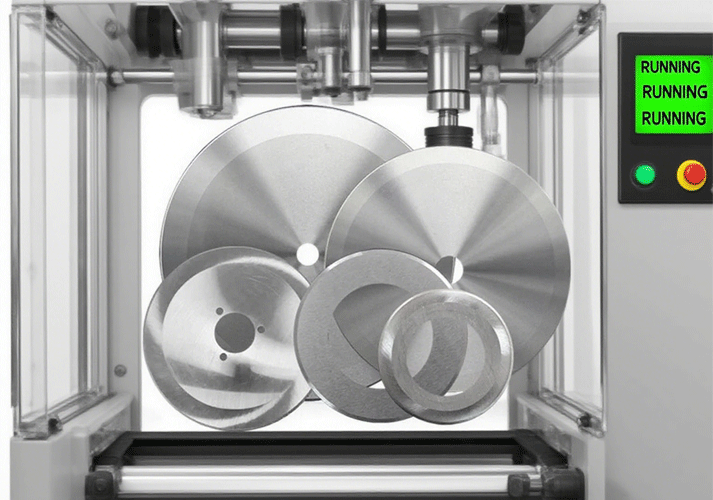
In conclusion, slicing blades in the packaging industry, as key tools in the packaging production process, the selection of materials and technological innovation directly affect the quality and production efficiency of packaging products. With the continuous progress of material science, intelligent technology, and precision processing technology, slicing blades will develop towards higher precision, higher efficiency, and more intelligent directions, providing strong support for the transformation and upgrading of the packaging industry. In the future, slicing blade technology will continue to integrate new materials and new technologies to meet the diversified, high-end, and green development needs of the packaging industry, playing a more important role in promoting the technological progress and industrial upgrading of the packaging industry.