
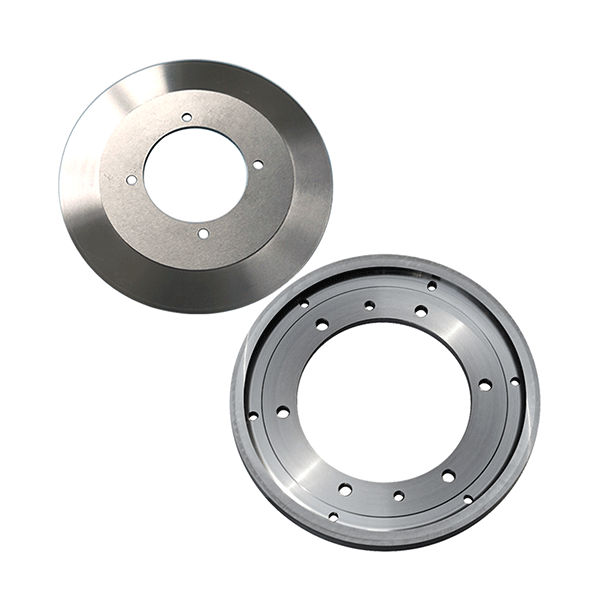
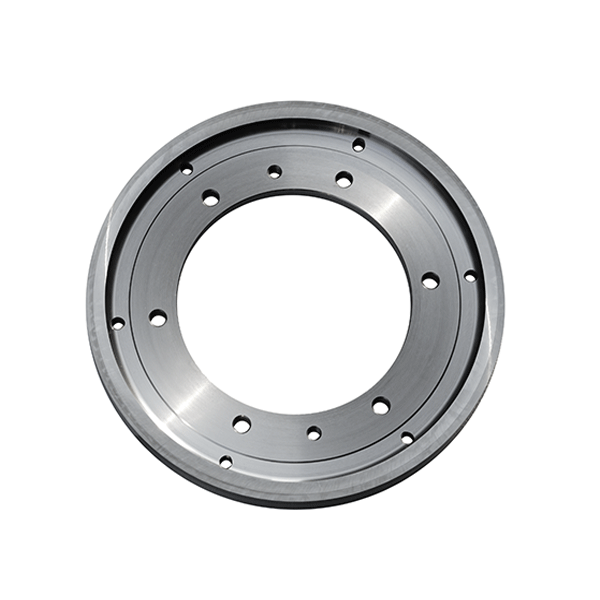
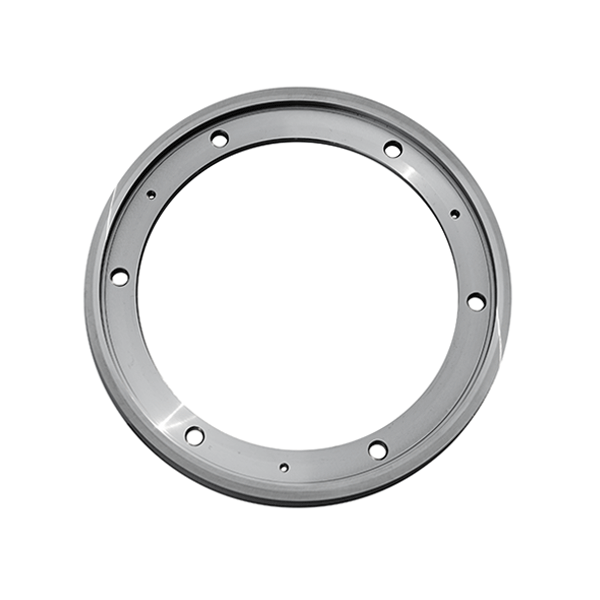
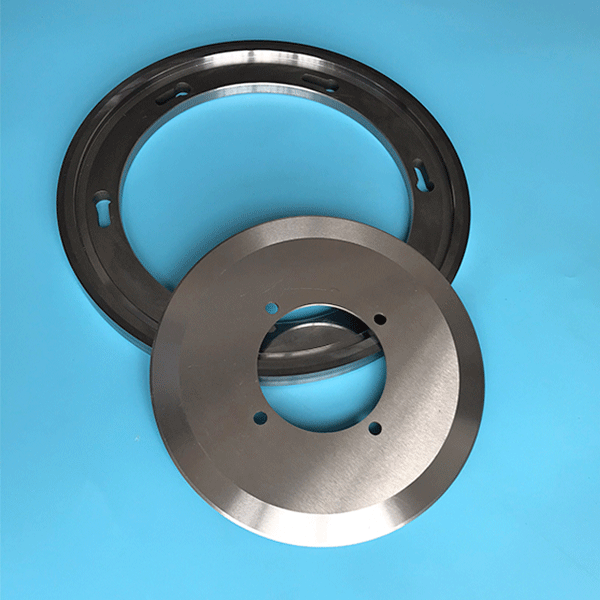
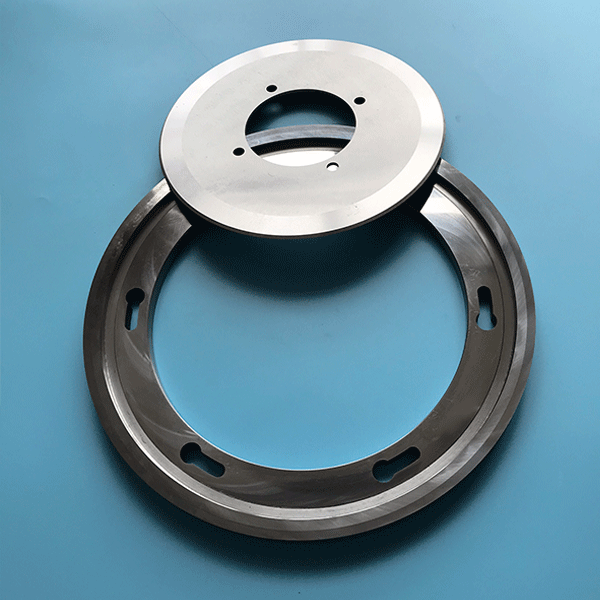
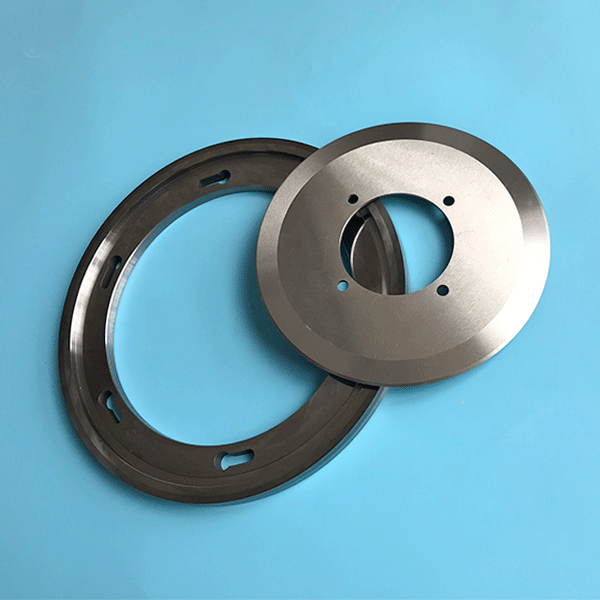
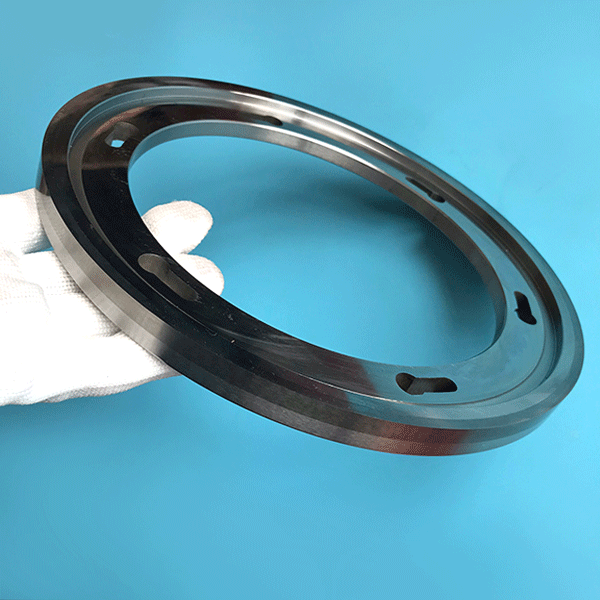
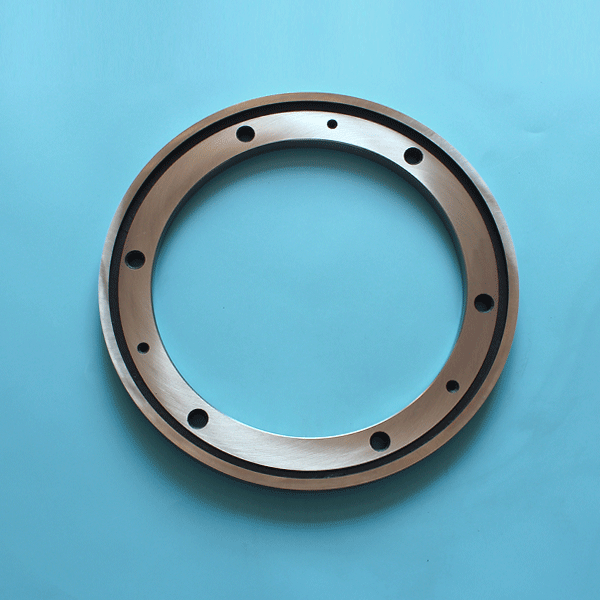
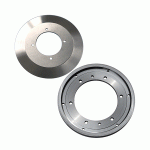
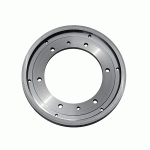
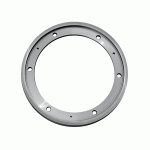
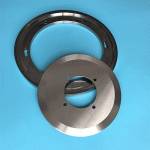
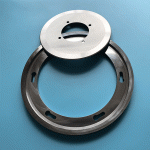
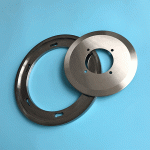
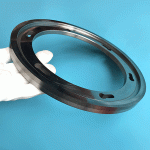
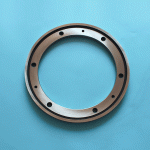
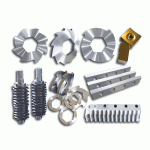
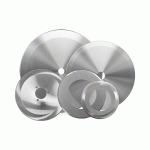
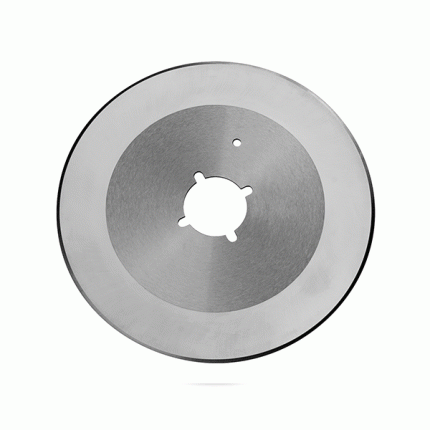
High-Speed Cutting Circular Blade Industrial Rewind Machine Bottom Blade For Paper Rolls


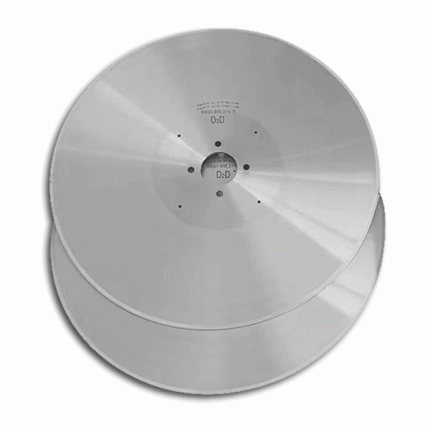
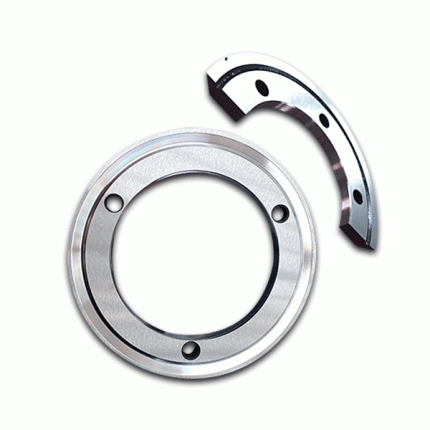
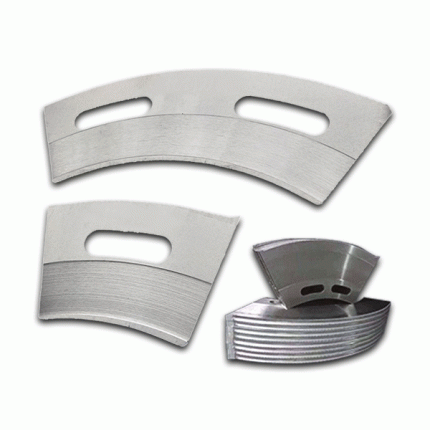
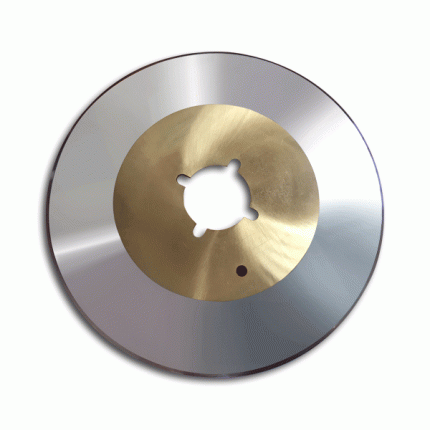
Products :The rewinding machine blade is the core cutting component for the cutting and rewinding operation on the rewinding machine (a specialized equipment for rolling paper, film, mica tape, etc.). Its main function is to precisely divide the large master roll material into narrow-width rolls of the required width according to the demand, or perform edge cutting, jointing, rewinding, and form finished rolls with uniform specifications and appropriate tightness before they can be shipped.
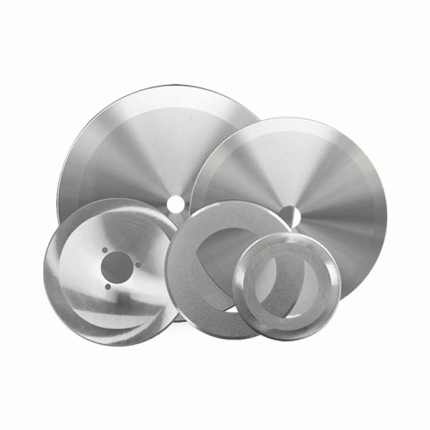
The rewinding machine blades usually need to be used in pairs (upper blade and lower blade / bottom blade in combination), or a multi-edge blade design is adopted. 。 The bottom knife of the winding machine is a core component of the cutting and winding equipment, mainly used for cutting large rolls (such as paper, film, non-woven fabric, aluminum foil, etc.) into small rolls of specific widths, or for trimming and winding the materials. Its manufacturing accuracy is extremely high, sometimes reaching the micron level, to ensure that the cut products have neat edges without burrs and meet the strict requirements of subsequent processing or printing.
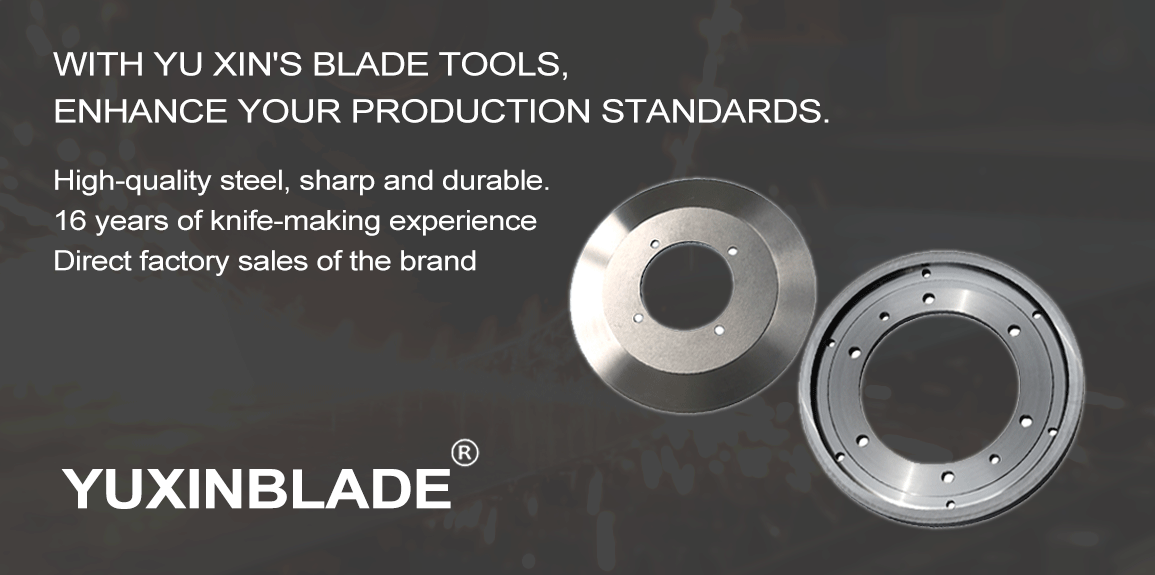
Product Name: Rewinder Blade / Rewinding Machine Blade
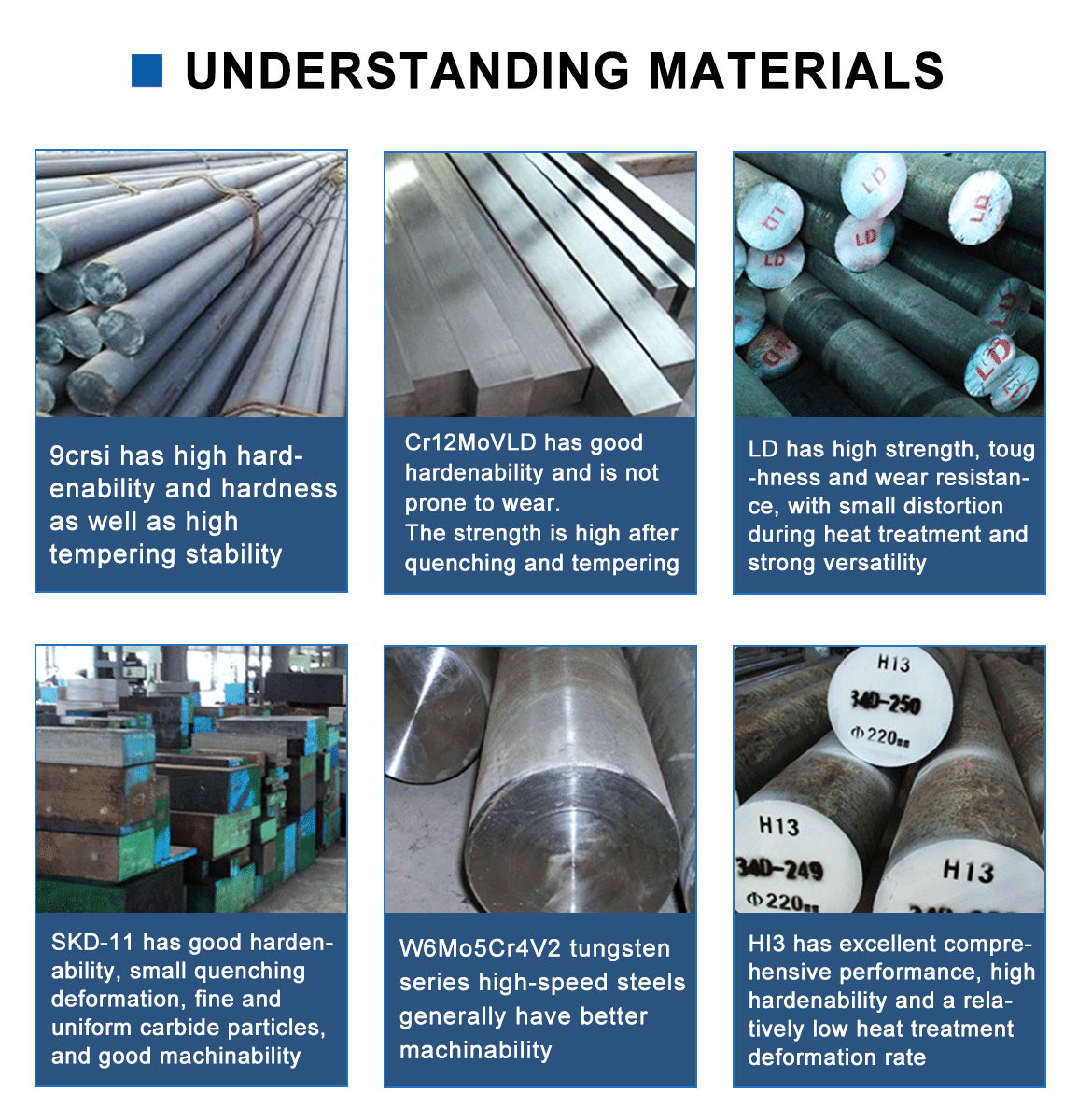
Material: Alloy tool steel: Such as 9CrSi and Cr12MoV, have good toughness and certain wear resistance, with high cost performance. They are common choices for many cutting applications.
High-speed steel (HSS): Examples include W6Mo5Cr4V2 and W18Cr4V. It has higher hardness, red hardness and wear resistance, and is suitable for basic cutting or high-speed slicing. It is inexpensive and offers good value for money.
Hard alloys: Such as tungsten-cobalt type hard alloys, tungsten carbide; they have extremely high hardness (above HRA 90) and wear resistance, with extremely long service life. They are particularly suitable for cutting high-erosive materials or in scenarios with high precision requirements, but the cost is relatively high.
Stainless steel: such as 420J2, 440C, etc. It is mainly used in food, medicine and other fields where hygiene and rust prevention are of high importance.
In addition, ceramic coating can be chosen. It not only withstands high temperatures but also resists oxidation, thereby extending the service life of the blades.
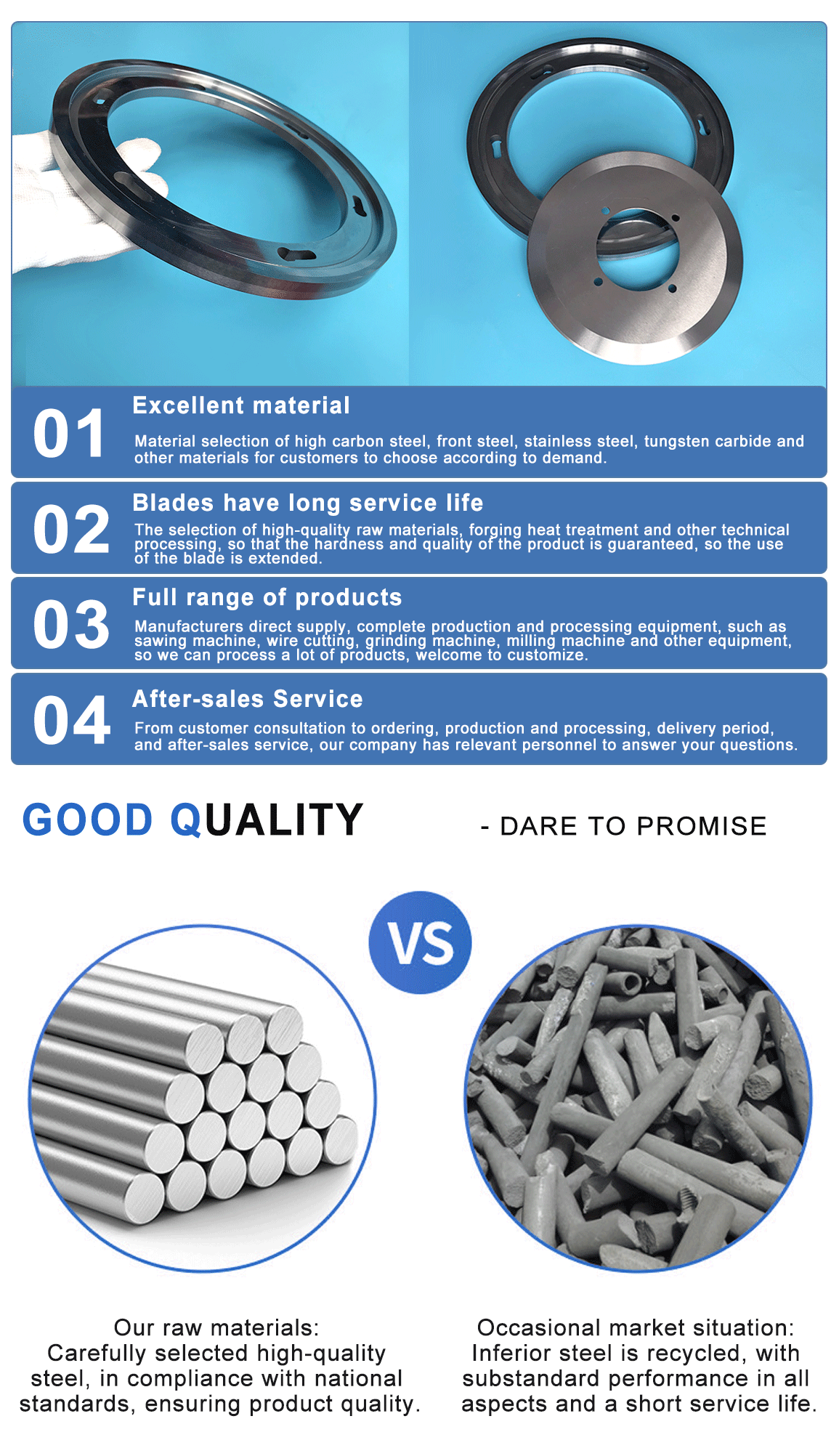
Size: The common diameter range is 50mm-300mm; The thickness is usually 0.5mm-3mm; The blade Angle is usually 20°-45° (customized according to the equipment model)
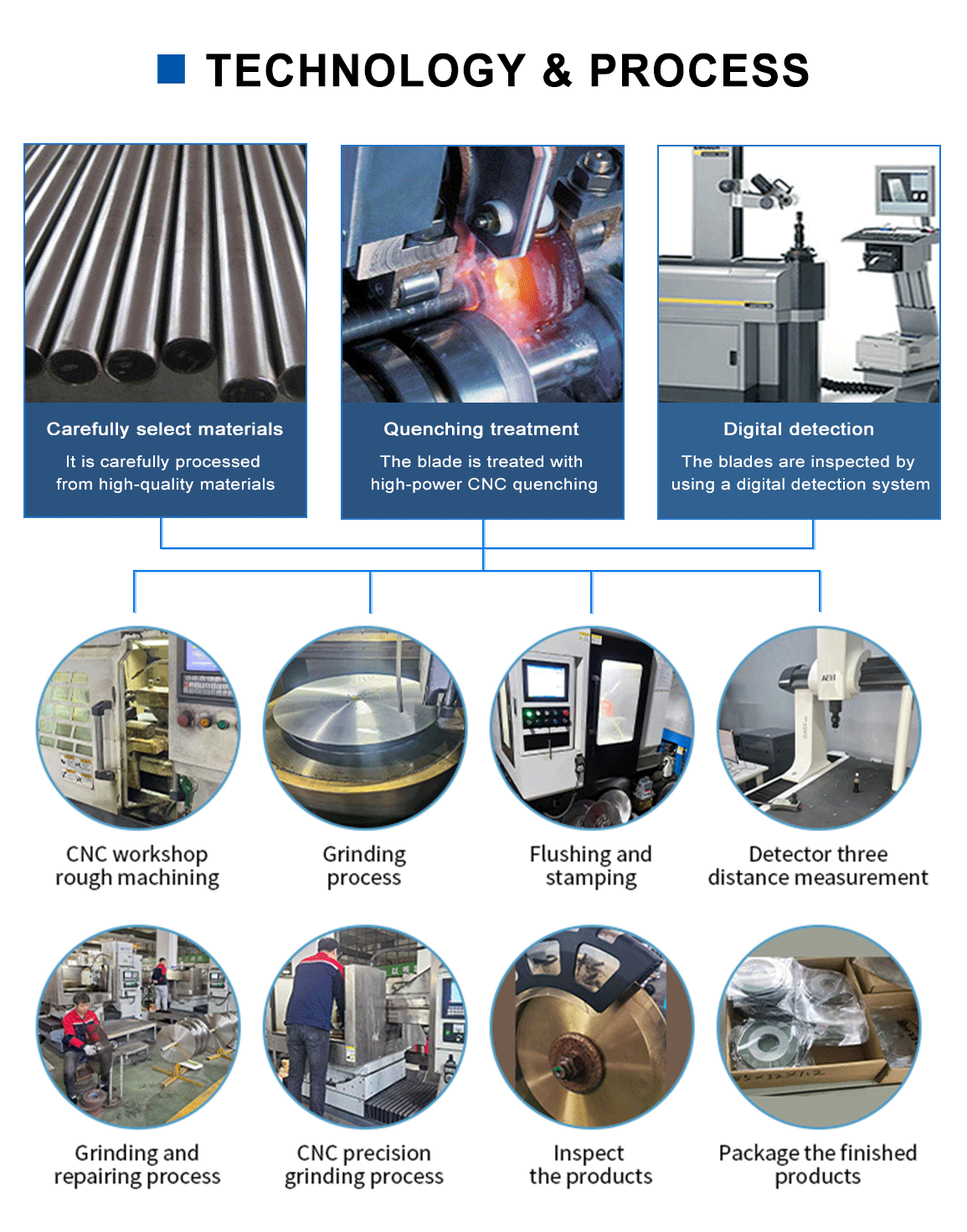
Type: Precision forging and processing, vacuum heat treatment, surface PVD coating, high-precision grinding of cutting edges
Features: High cutting accuracy and smoothness: The cutting edge is often finely ground to a mirror-like finish, enabling cutting with micron-level precision. The blade is sharp, the cutting edge is smooth and flat without burrs, minimizing material waste and ensuring product quality.
High efficiency and multi-edge design: The multi-edge knife can complete multiple cuts in one run, eliminating the need for frequent tool changes, significantly reducing production downtime and improving production efficiency.
Excellent wear resistance: Using high-quality alloy materials (such as high-speed steel, cemented carbide) and undergoing special heat treatment, the blade has high hardness (such as HRC 58-60), excellent wear resistance, and a long service life.
Corrosion resistance and anti-sticking properties: Some blades will be made of stainless steel or coated with Teflon or other anti-sticking materials to adapt to humid environments or prevent certain materials (such as those containing sugar, oil, or sticky polymers) from sticking.
Stable thermal performance: High-quality blade materials (such as high-speed steel, cemented carbide) have excellent red hardness and can maintain hardness and performance stability even under the heat generated during high-speed cutting.
Easy replacement and maintenance: Many modern rewinding machine blades adopt modular quick-change designs (such as quick-release structures), facilitating rapid conversion and maintenance of the production line and reducing downtime.
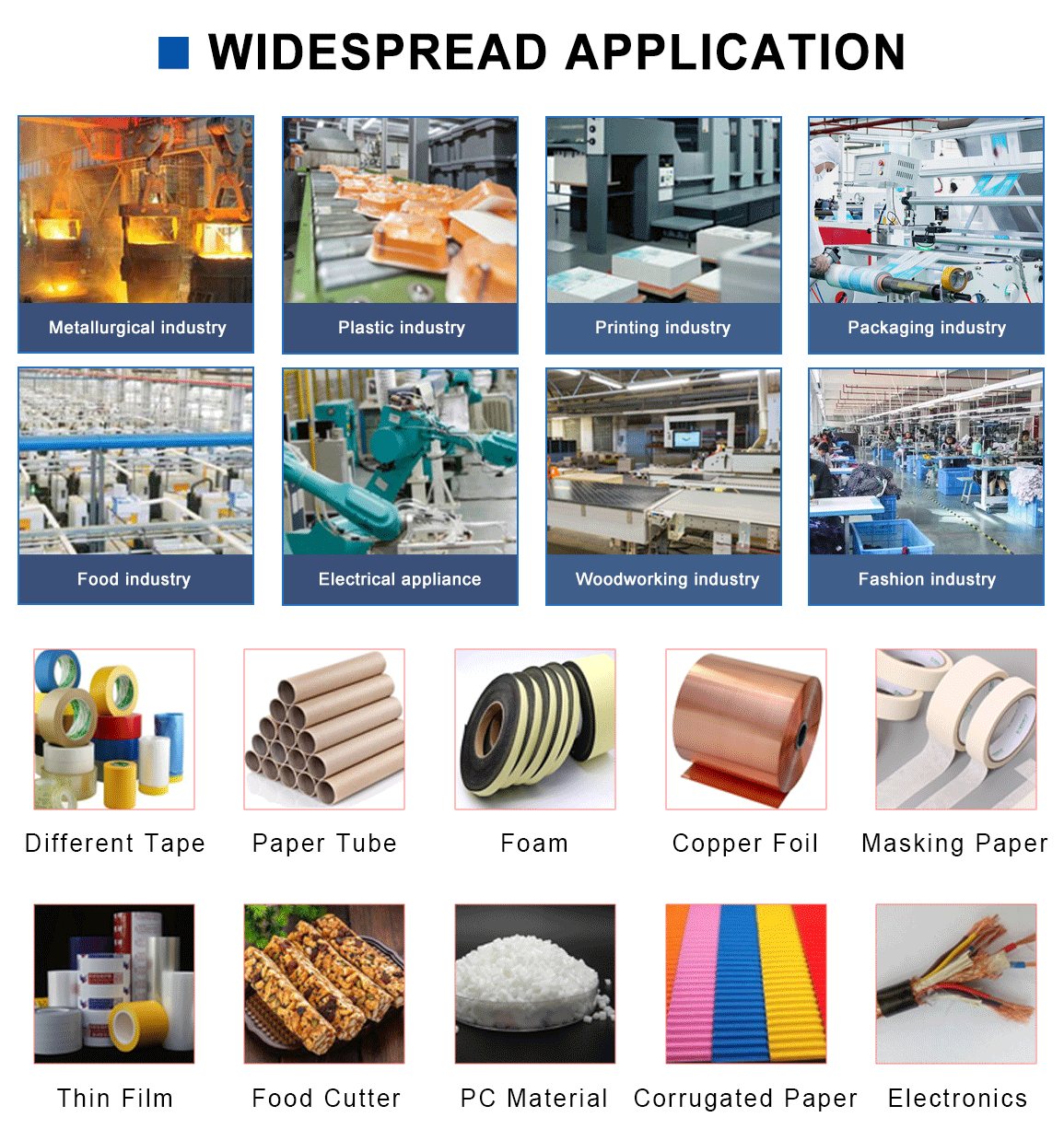
Application Scenario: The application of rewinding machine blades is very extensive, covering almost all industries that need to handle rolled materials:
Paper and Printing Industry: Cut various news papers, coated papers, kraft papers, whiteboard papers, cigarette papers, etc.;
Plastic and Film Industry: Cut various plastic films and packaging materials such as BOPP, CPP, PET, PVC, etc.;
Metal Foil Processing: Cut precision metal materials such as gold, silver, copper, aluminum foil, as well as tapes, etc.;
Non-woven Fabric and Textile Industry: Cut non-woven fabrics, fabrics (such as in the clothing industry), sand cloth and sand belts, etc.;
Other Fields: Cut rubber rolls, paper-plastic composite packaging materials (such as self-adhesive labels), decorative materials, etc.
Selection criteria:
- Select based on material properties: For cutting ordinary paper and films, cost-effective alloy tool steel can be chosen; for cutting high-strength or abrasive material rolls (such as sand belts, metal foils), high-speed steel or carbide blades can be considered; for applications with high hygiene requirements, stainless steel blades should be selected.
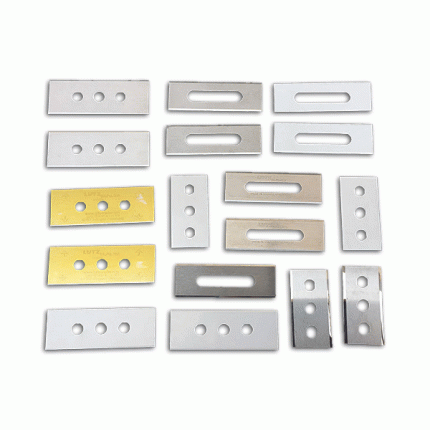
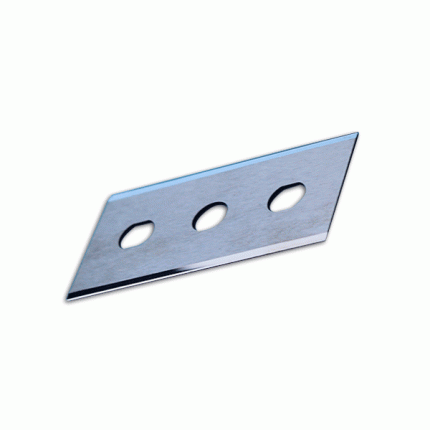
- Choice of blade edge design: The grinding angle of single-edge blade is usually in the range of ∠19° to 23°. Double-edge blades have better wear resistance, which can reduce the load of the paper cutting machine and improve the cutting accuracy.
- Consider non-standard customization: For special materials or unique cutting requirements, Yuxin offers non-standard customization services. They can tailor the specifications and shapes of the cutting tools to meet specific needs, thereby enhancing cutting efficiency and economic benefits.
To quickly compare the primary materials we offer, here is a summary table:
| Material Type | Typical Hardness (HRC) | Key Advantages | Limitations | Ideal For |
| High-Speed Steel (HSS) | 60-68 | Excellent toughness, good wear resistance, cost-effective. | Lower wear resistance than carbide, requires more maintenance. | General-purpose metalworking, woodworking, plastic cutting. |
| Tool Steel (e.g., SAE1095) | 58-62 (Hardened) | High strength, excellent wear resistance, good sharpness. | Less resistant to high temperatures than HSS or Carbide. | Springs, hand tools, scrapers, industrial cutters. |
| Carbide / Tungsten Carbide | 60-65 (Blades) | Exceptional hardness & wear resistance, high heat resistance. | Brittle, higher cost, complex manufacturing. | Hard materials, abrasive non-ferrous metals, high-volume production. |
| Stainless Steel | Varies (e.g., 420, 440) | Excellent corrosion resistance, durable, hygienic. | Generally not as hard as tool steels or HSS. | Food processing, medical instruments, wet environments. |
| Ceramic | N/A (Extremely Hard) | Superior edge retention, corrosion resistance, hygienic, lightweight. | Fragile, limited cutting capacity, higher cost. | Precision cutting in specific industries (e.g., textiles, packaging). |
We Are Here to Help: Choosing the right material is complex. As a factory, we have the expertise to guide you. We offer custom blade solutions and can advise on the optimal material, heat treatment, and geometry for your specific application.
Contact us today for a personalized recommendation and quote. Let our manufacturing expertise solve your cutting challenges.
Reviews
There are no reviews yet.