
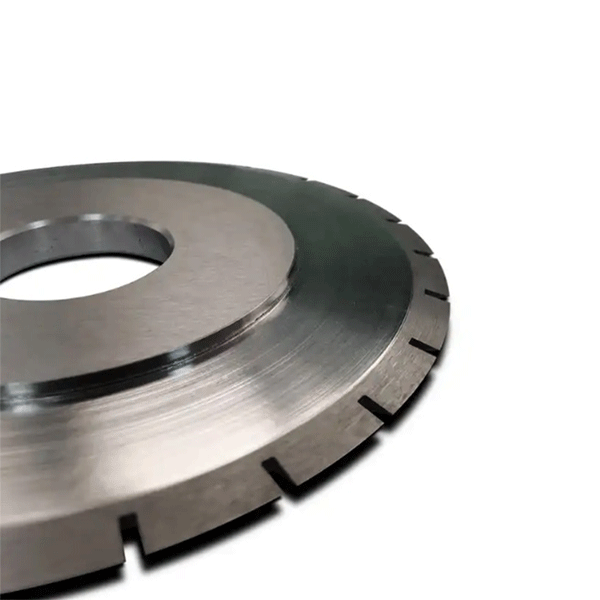
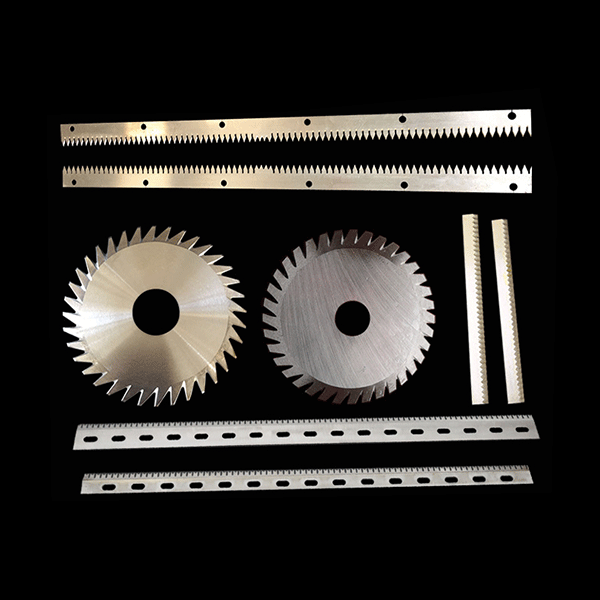
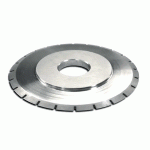
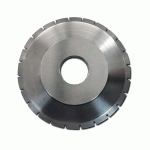
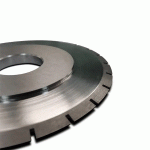
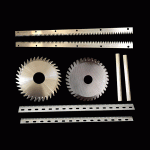
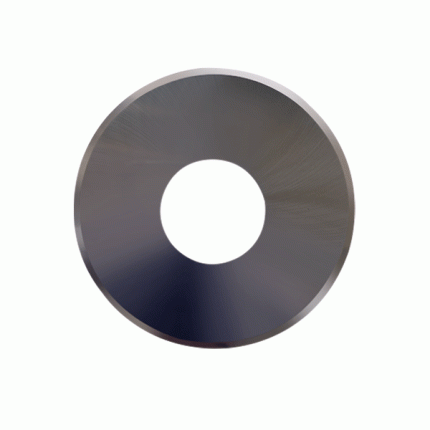
High quality Printing Machine Round Tooth Cutter blades Gear-Shaped Precision Coil slitting Knife


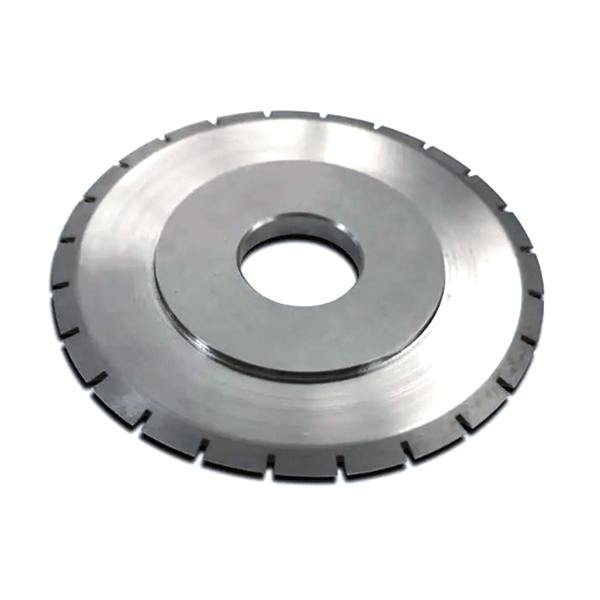
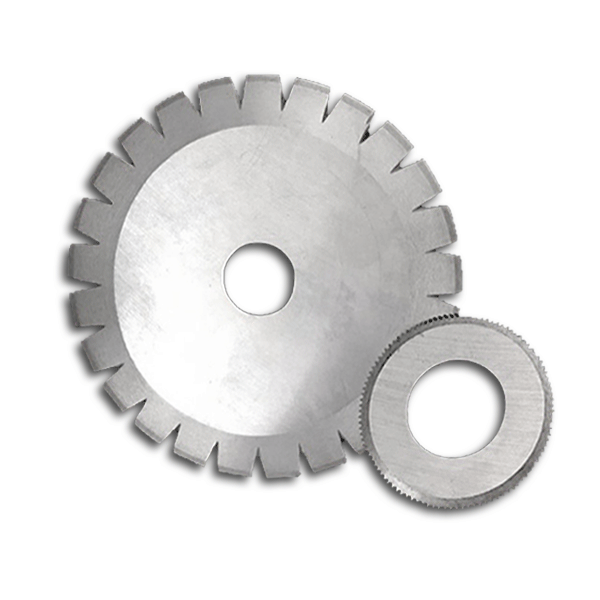
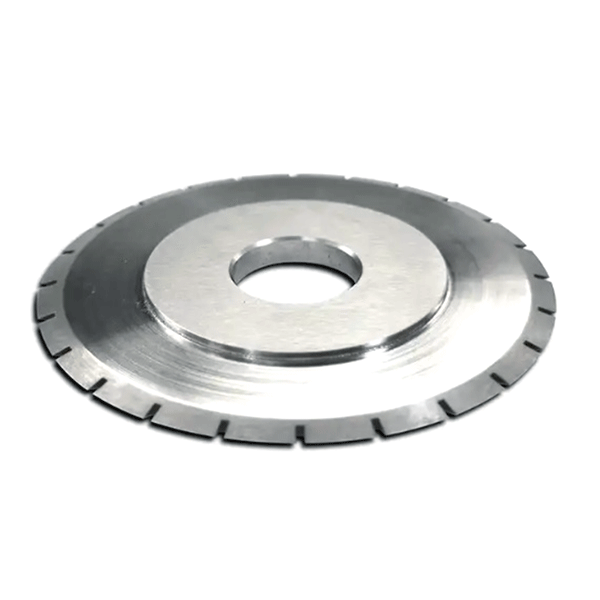
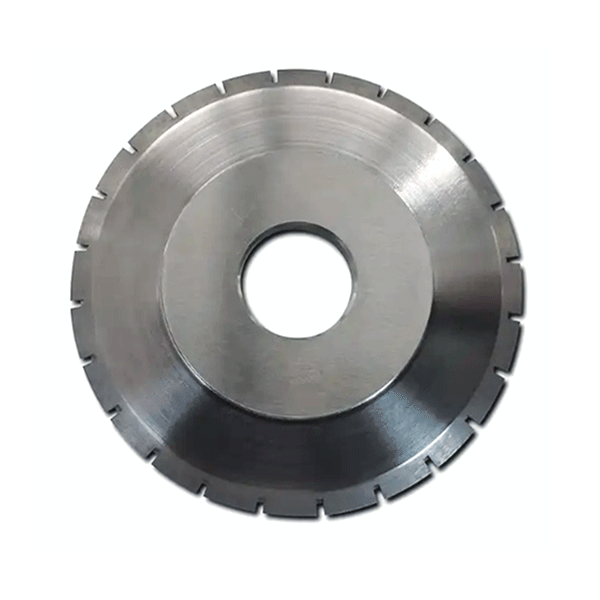
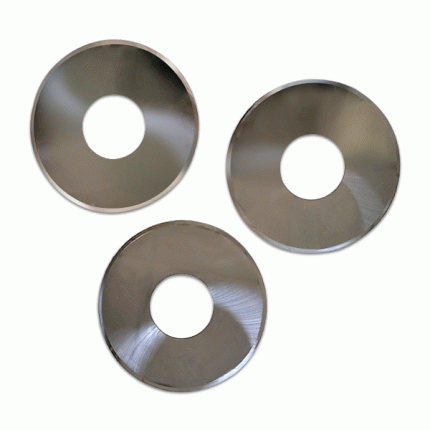
Products :The round teeth cutting blade of a printing machine, also known as a dividing round blade or toothed blade, is a circular tool used on printing machines (such as dividing machines, longitudinal cutting machines, rewinding machines) to precisely divide or cut rolls of paper, film, metal foil, etc. Its blade design features specific tooth shapes (such as flat teeth, pointed teeth, or wavy teeth), which achieve efficient and precise cutting through rotational shearing action. This ensures that the cut edges are smooth, flat, free of burrs and scratches, meeting the high-quality requirements of the printing and packaging industries for material slicing.
The circular teeth cutter of the printing machine is a crucial tool in the post-printing processing stage, specifically designed for the high-speed cutting of rolled materials after printing. It can handle thin materials with a thickness ranging from 0.02 to 2 millimeters, and during the cutting process, there are no burrs and no adhesion, thus ensuring the integrity of the printed patterns.
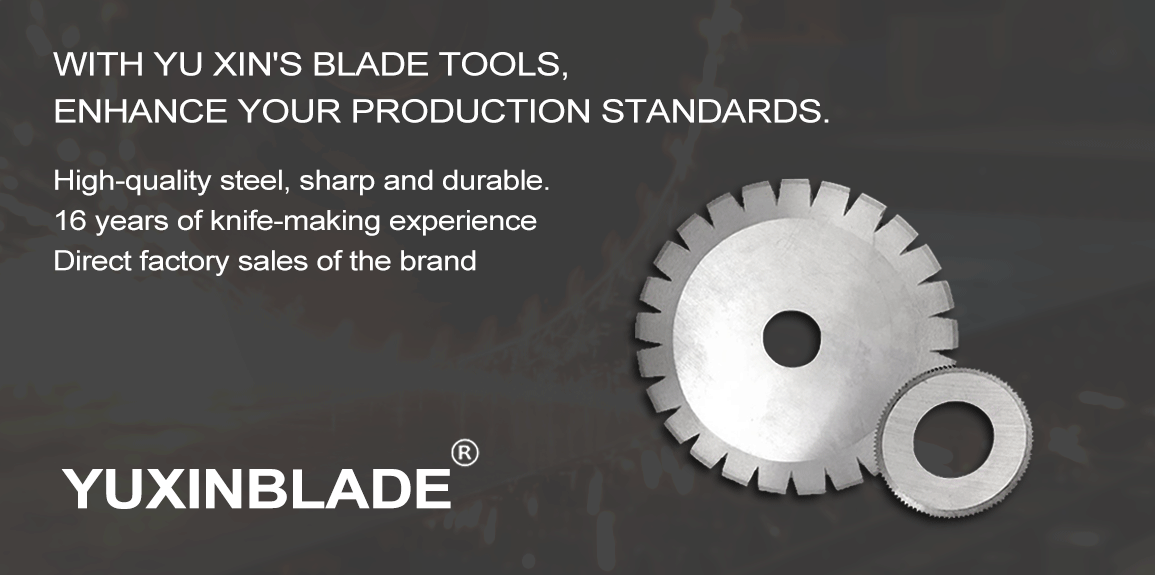
Product Name: Printing Machine Round Tooth Cutter blades / Gear-Shaped Round Blade
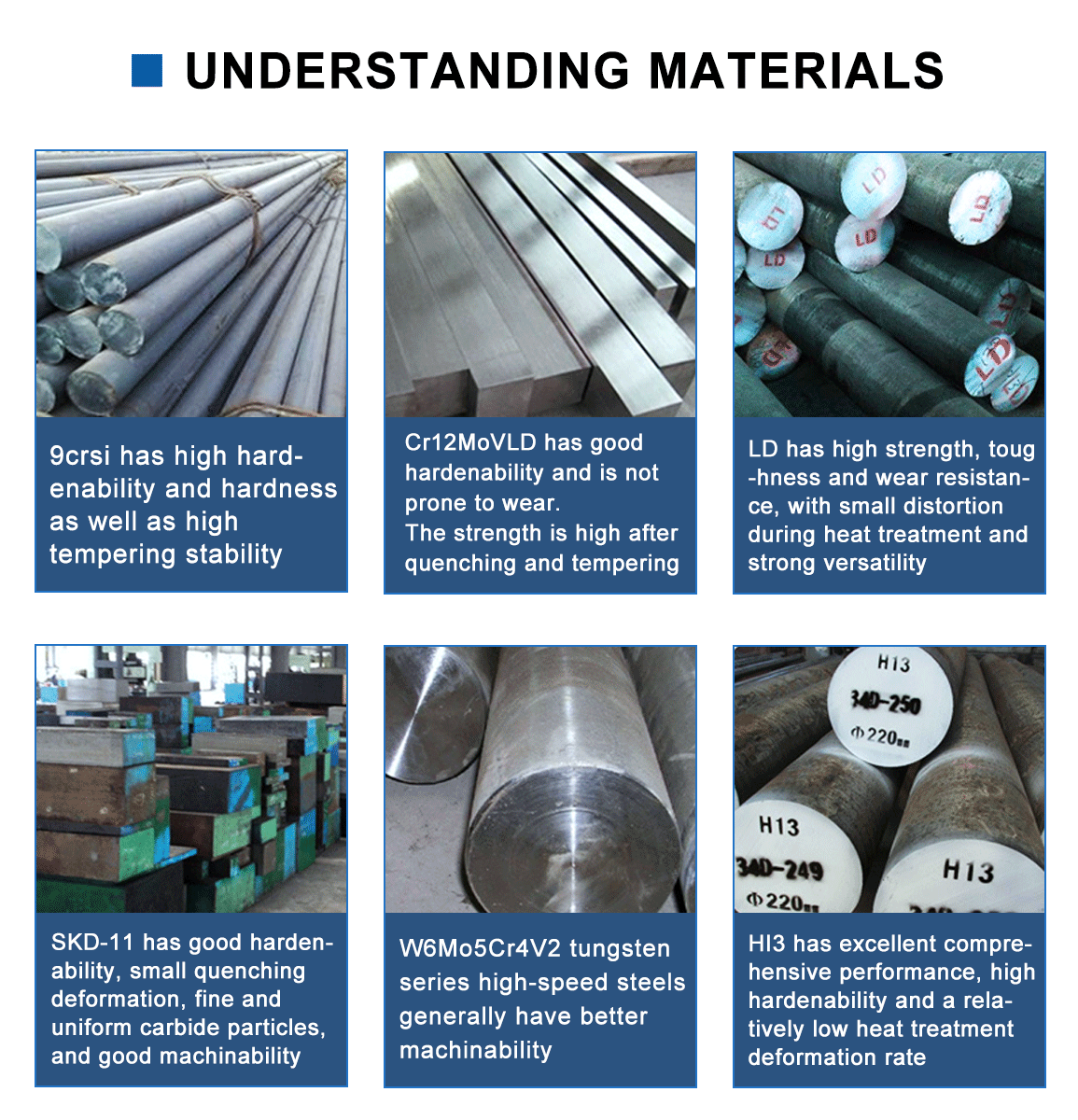
Material: High-speed steel (HSS) such as W6Mo5Cr4V2 (M2), W18Cr4V; alloy tool steel such as 9CrSi, Cr12MoV, SKD-11; hard alloy such as YG8, YG6X, YG1; high-speed powder steel ASP-30/60; ceramic blades; nano-coatings such as TiCN/AITiN.
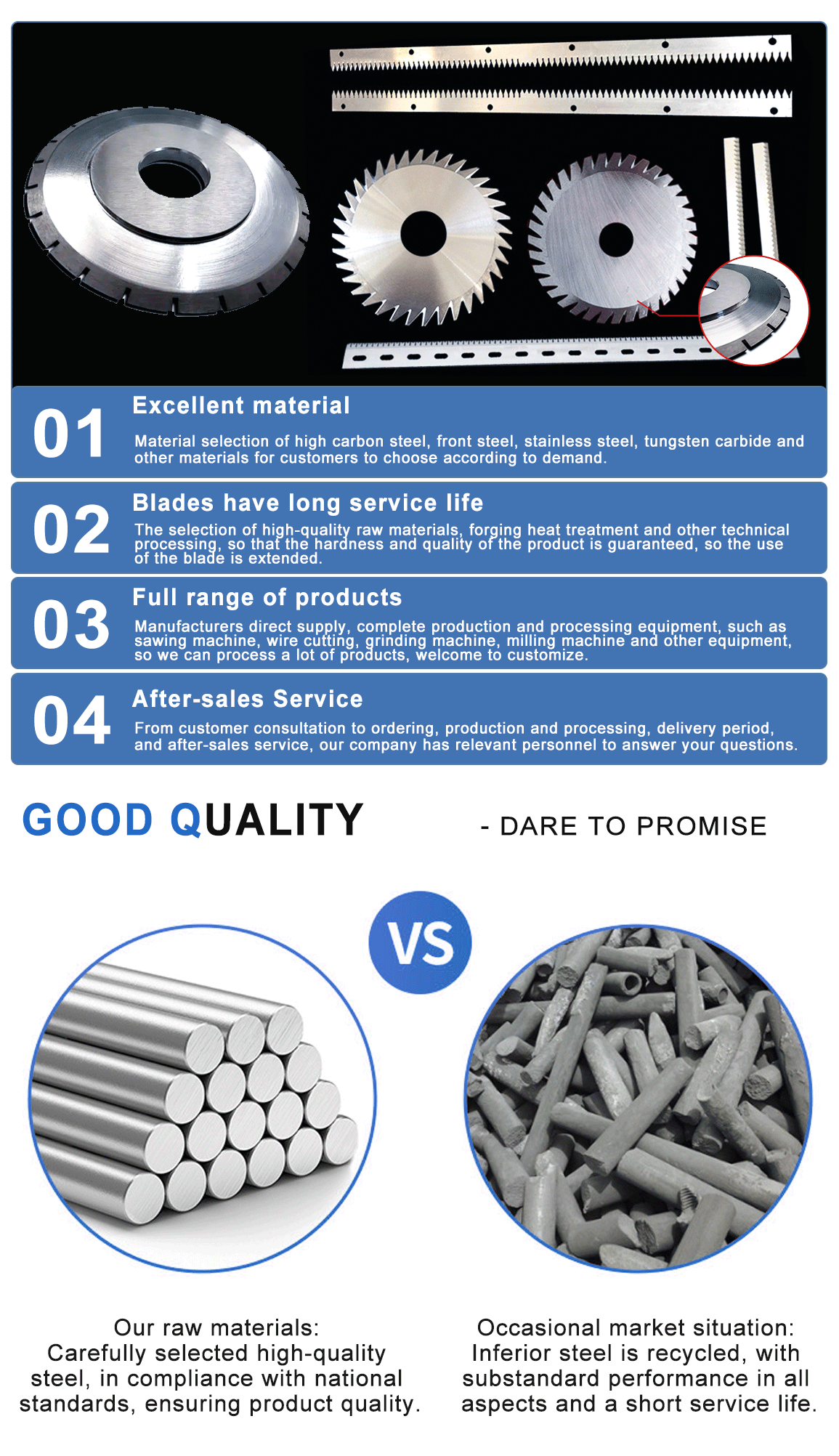
Size: The specifications are usually expressed as outer diameter (D) x inner hole diameter (d) x thickness (B). The range of outer diameter is from 80mm to 1000mm. Inner hole range: 25.4mm (one inch) – 70mm; Thickness range: 0.5mm – 3mm (customizable according to customer requirements)
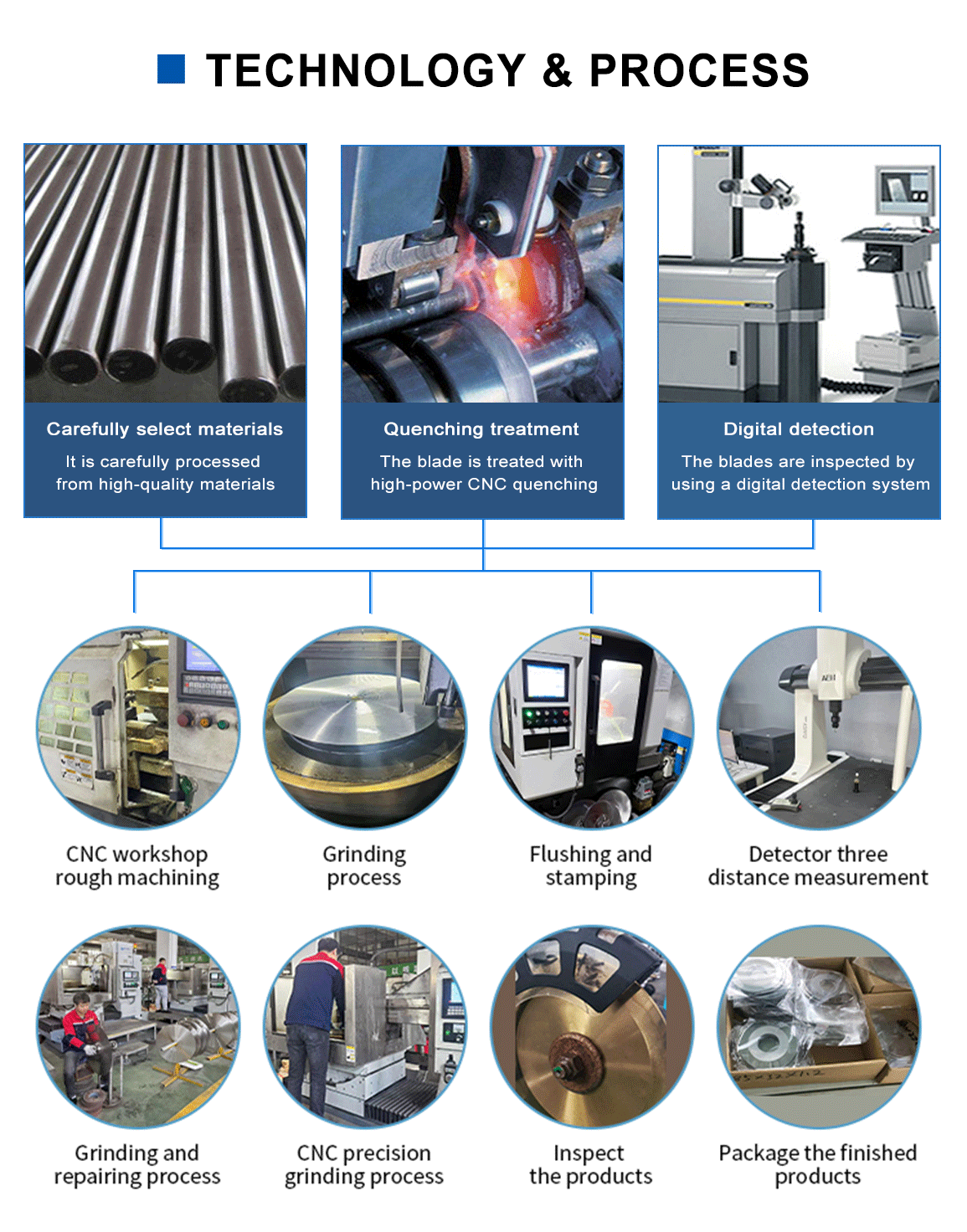
Type: Precise heat treatment (including processes such as vacuum quenching and tempering), high-precision grinding, and based on the characteristics of the cutting material, designing different tooth shapes such as flat teeth, pointed teeth, and wavy teeth.
Features:
- High hardness and wear resistance: Using high-quality materials (such as high-speed steel and hard alloy), after heat treatment, the hardness can reach above HRC 58, with excellent wear resistance and a long service life.
- High-precision tooth design, achieved through CNC laser engraving or precise grinding techniques, can reduce cutting resistance; the ultra-thin cutting edge is highly wear-resistant, with a hardness of up to HV2000 – 3500, and the service life is increased by 3 – 5 times.
- High adaptability: Anti-adhesion and anti-static properties, reducing the risk of material melting and sticking, featuring electrostatic dissipation design (such as conductive coating); suitable for printing machine line speeds of 300 – 800 meters per minute, supporting rapid tool replacement online, reducing downtime.
- Precise cutting capability: The blade edge has been precisely ground (with an accuracy reaching the micrometer level), and the tooth design is reasonable, ensuring smooth cutting, flat cuts without burrs, and meeting the requirements for high-precision slicing.
- Corrosion Resistance: Some of the blades are made of stainless steel or have special coatings, which can resist corrosion from substances such as water, ink, and solvents.
- Special tooth design: According to different material properties (such as hardness, thickness, and toughness), various tooth shapes such as flat teeth, pointed teeth, and wavy teeth are designed to optimize the cutting effect, reduce resistance, and prevent material adhesion or tearing.
Application Scenario:
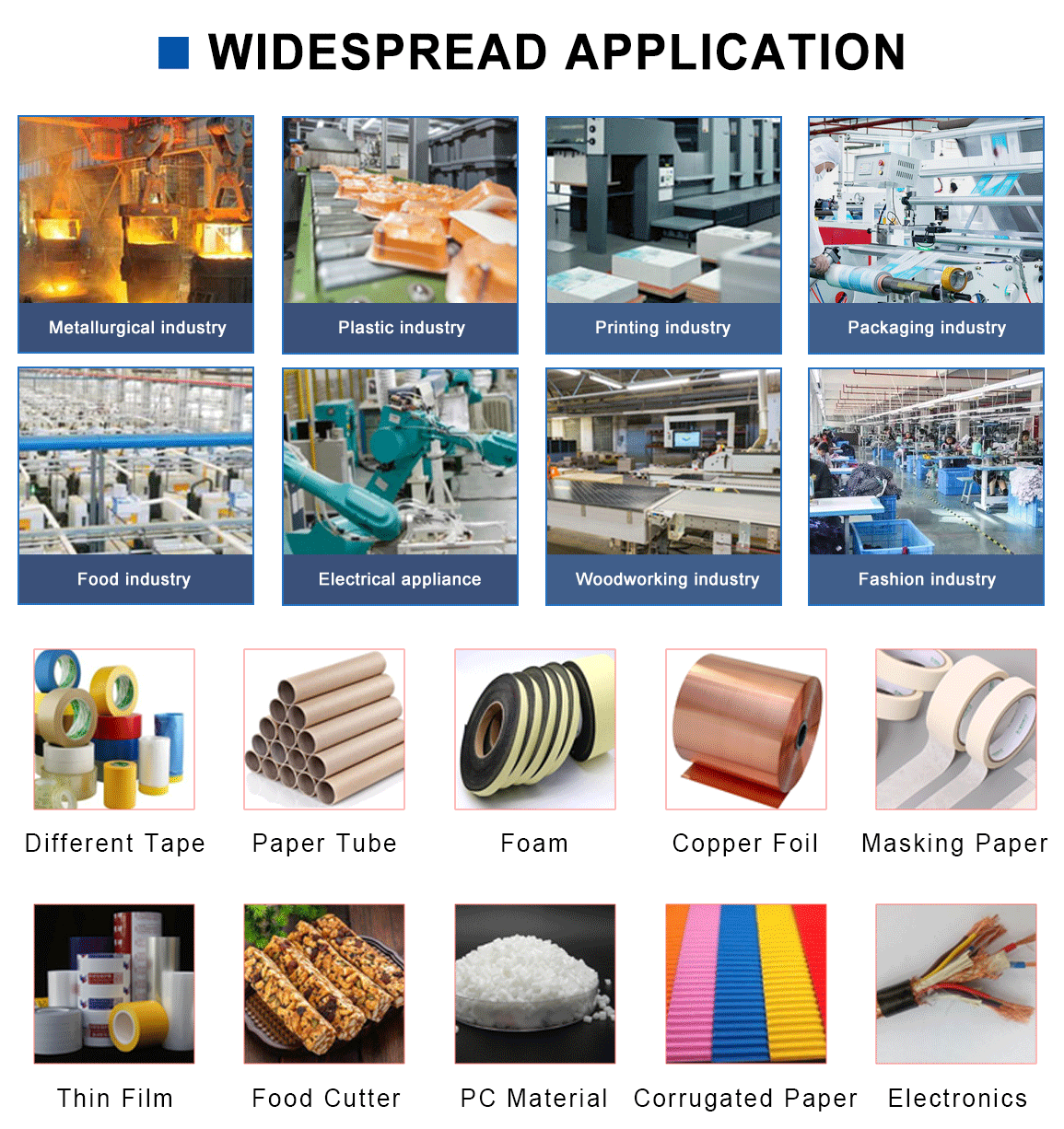
- Label and packaging printing: Self-adhesive labels, PET/PP film slitting and die-cutting, used for the production of food and pharmaceutical labels.
- Precise cutting processing of electronic materials: Release paper and protective film cutting, used for screen bonding and circuit board covering film processing. Dust-free conductive tapes and insulating material strips, meeting the requirements of electronic component packaging.
- Industrial film application: Conduct non-destructive cutting on optical films (brightening films, diffusion films) to ensure uniform light transmission in display panels. Achieve high-precision cutting of lithium battery separators to avoid short-circuit risks caused by burrs. Cut various plastic films such as BOPP, CPP, PET, PVC, and composite packaging materials.
- Paper processing and printing industry: Cut newsprint, coated paper, kraft paper, whiteboard paper, cigarette paper and other types of paper evenly to ensure smooth edges.
- Non-woven fabric and textile industry: Cutting non-woven fabrics, fabrics, synthetic fibers, etc.
Selection suggestions: • Selecting based on processing materials: For cutting ordinary paper and films, alloy tool steel (such as 9CrSi) can be chosen; for cutting high-strength or highly abrasive materials (such as metal foil, composite films), high-speed steel or carbide blades can be considered.
- Confirm device compatibility: Make sure that the outer diameter, inner hole, and thickness of the blade match the model of your printing machine or slitting machine.
- Consider tooth design: Select the appropriate tooth profile based on the material properties (for example, wavy teeth for soft materials, flat teeth for general cutting)
To quickly compare the primary materials we offer, here is a summary table:
| Material Type | Typical Hardness (HRC) | Key Advantages | Limitations | Ideal For |
| High-Speed Steel (HSS) | 60-68 | Excellent toughness, good wear resistance, cost-effective. | Lower wear resistance than carbide, requires more maintenance. | General-purpose metalworking, woodworking, plastic cutting. |
| Tool Steel (e.g., SAE1095) | 58-62 (Hardened) | High strength, excellent wear resistance, good sharpness. | Less resistant to high temperatures than HSS or Carbide. | Springs, hand tools, scrapers, industrial cutters. |
| Carbide / Tungsten Carbide | 60-65 (Blades) | Exceptional hardness & wear resistance, high heat resistance. | Brittle, higher cost, complex manufacturing. | Hard materials, abrasive non-ferrous metals, high-volume production. |
| Stainless Steel | Varies (e.g., 420, 440) | Excellent corrosion resistance, durable, hygienic. | Generally not as hard as tool steels or HSS. | Food processing, medical instruments, wet environments. |
| Ceramic | N/A (Extremely Hard) | Superior edge retention, corrosion resistance, hygienic, lightweight. | Fragile, limited cutting capacity, higher cost. | Precision cutting in specific industries (e.g., textiles, packaging). |
We Are Here to Help: Choosing the right material is complex. As a factory, we have the expertise to guide you. We offer custom blade solutions and can advise on the optimal material, heat treatment, and geometry for your specific application.
Contact us today for a personalized recommendation and quote. Let our manufacturing expertise solve your cutting challenges.
Reviews
There are no reviews yet.