
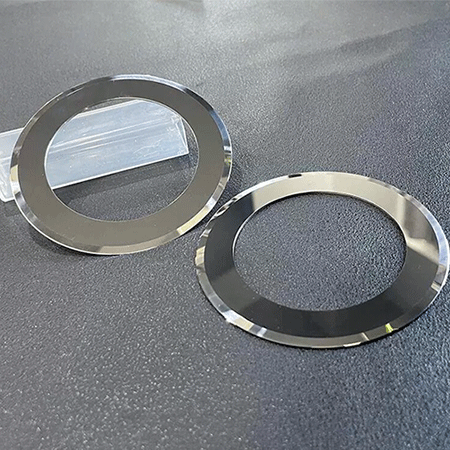
Industrial Grade Tungsten Carbide Circular Blades For Precise Strip Cutting Durable And Suitable
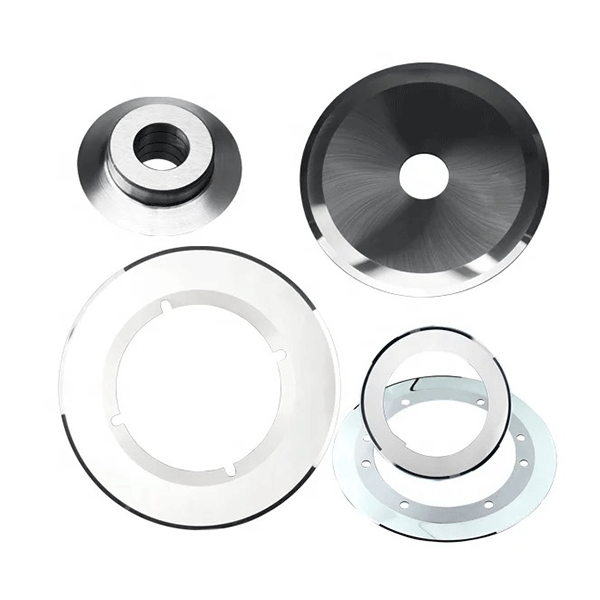
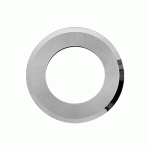
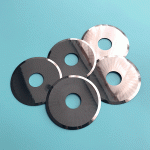
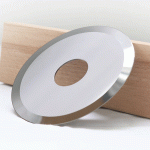
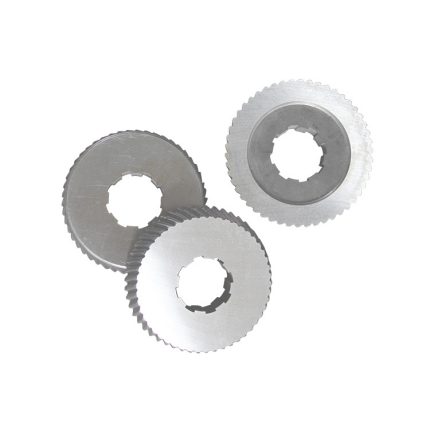
Tungsten steel round blades are usually made from high-quality tungsten carbide alloy (mainly composed of tungsten carbide and cobalt) through powder metallurgy process. 。 This process endows the blade with extremely high hardness, wear resistance and thermal stability, making it highly suitable for high-speed and precise cutting operations. It is applicable for cutting metals, plastics, composite materials and other hard materials. Depending on the shape and design, common tungsten steel round blades include flat round blades and toothed round blades, etc.


Products :Tungsten steel round blades are usually made from high-quality tungsten carbide alloy (mainly composed of tungsten carbide and cobalt) through powder metallurgy process. 。 This process endows the blade with extremely high hardness, wear resistance and thermal stability, making it highly suitable for high-speed and precise cutting operations. It is applicable for cutting metals, plastics, composite materials and other hard materials. Depending on the shape and design, common tungsten steel round blades include flat round blades and toothed round blades, etc.
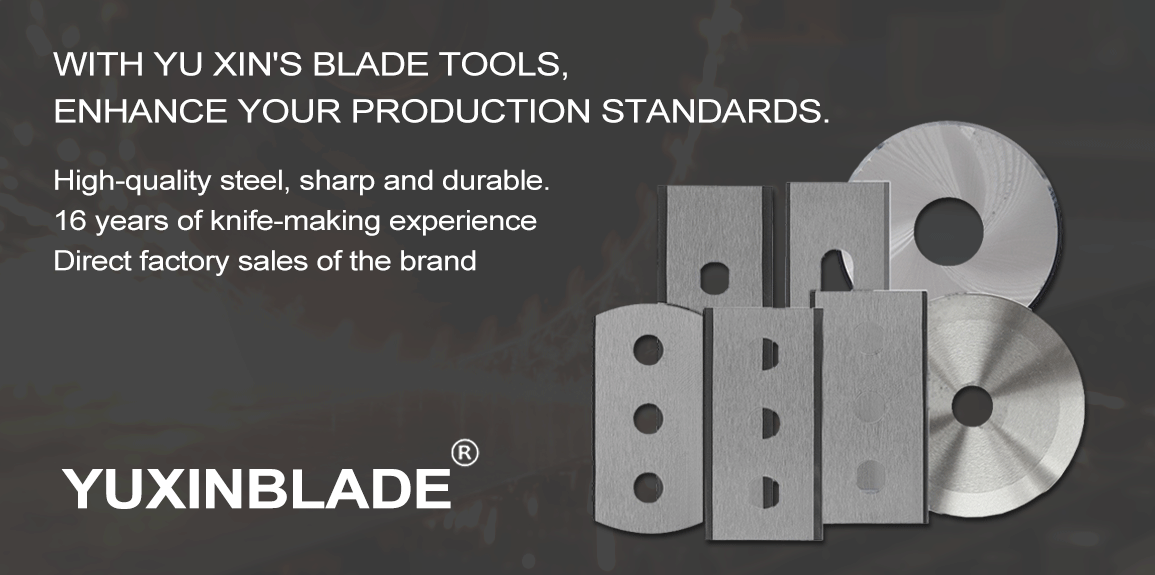
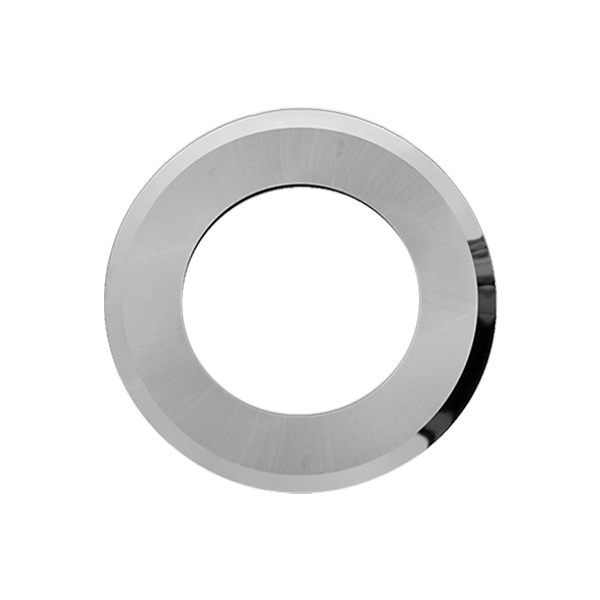
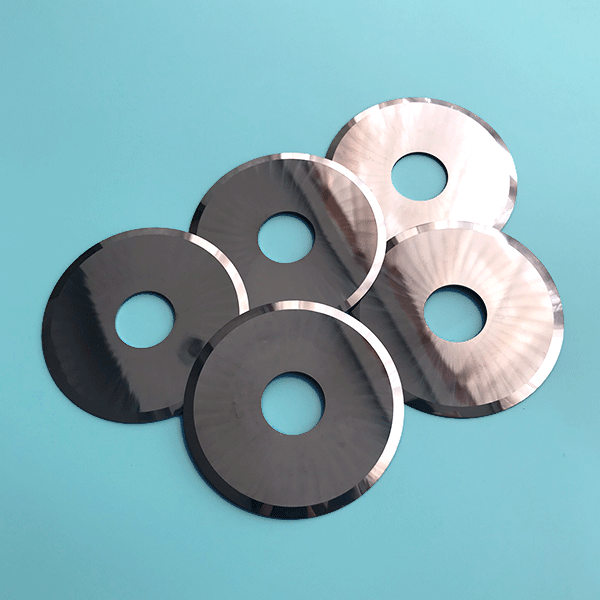
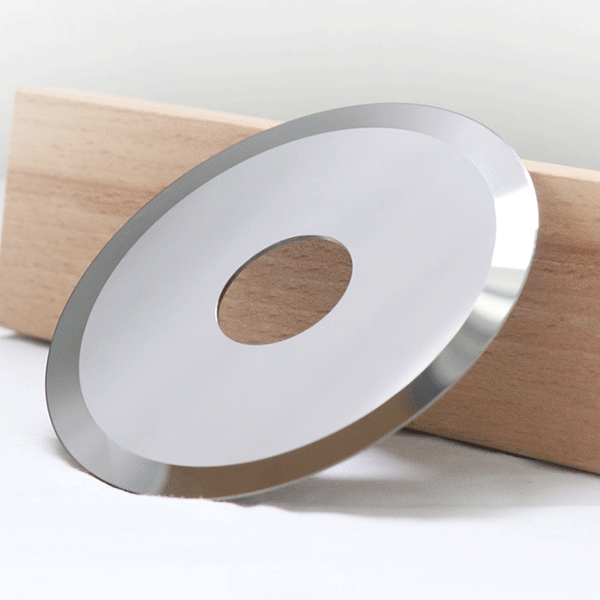
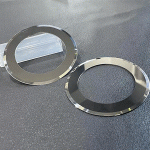
Product Name: Alloy Circular Knife-Tungsten Steel Carbide Circular Blades
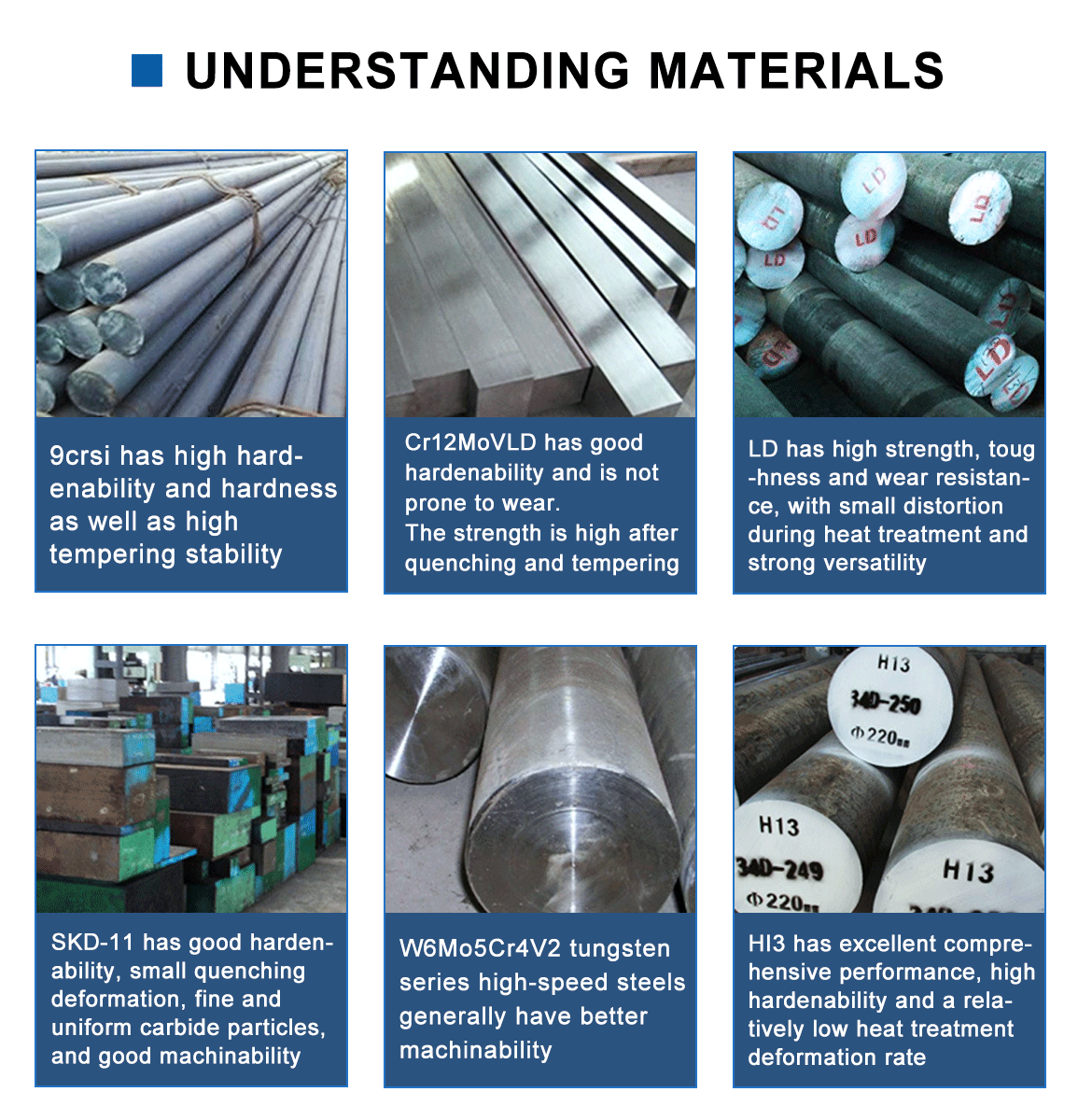
Material: Tungsten steel round blades are mainly made of tungsten carbide-based hard alloys. Common types include: tungsten-cobalt type (YG type): such as YG6, YG8, etc; tungsten-cobalt-titanium type (YT type) or rare carbide-added type (YW type).
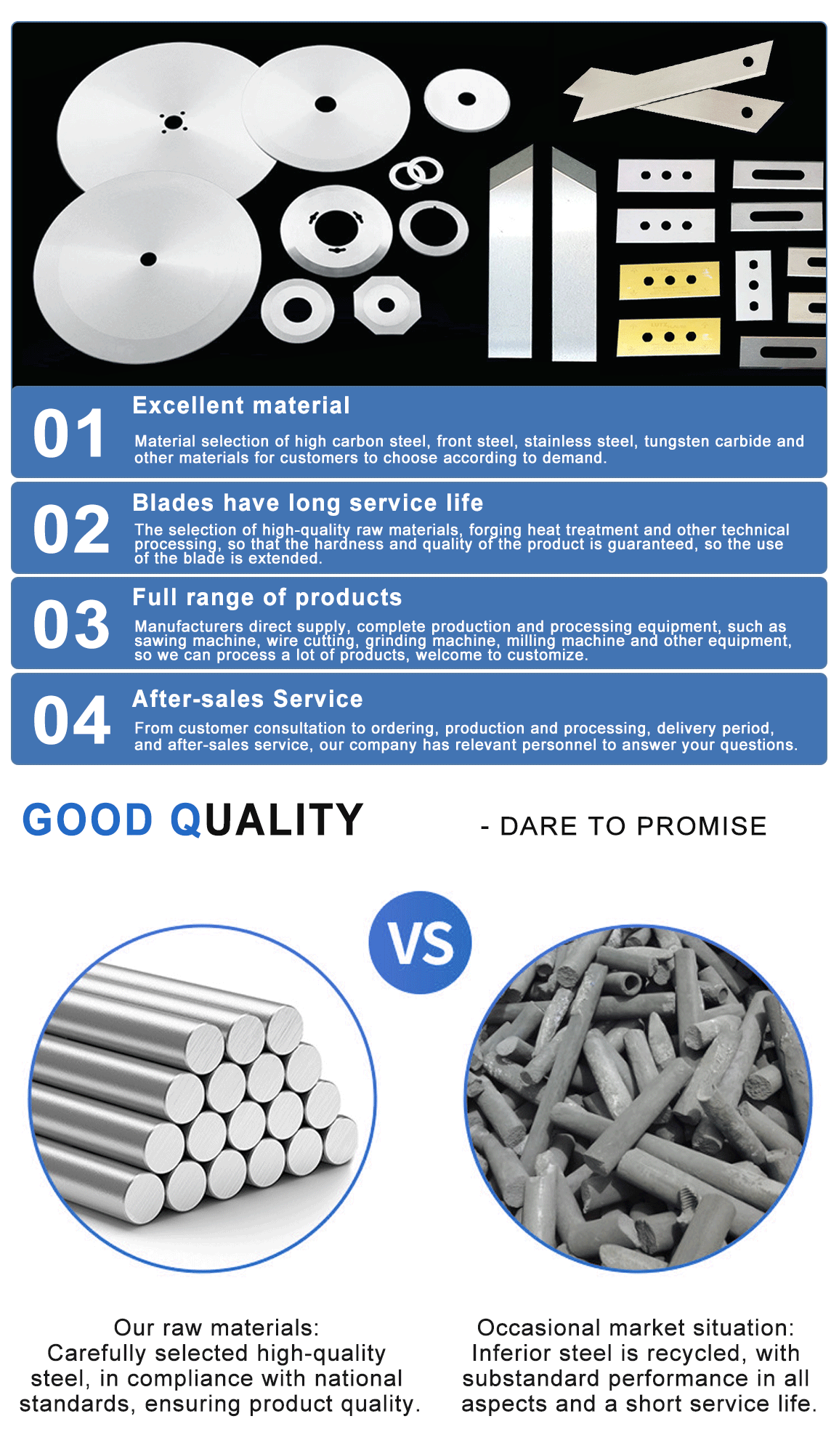
Size: Different types of tungsten steel blades have different sizes. Most of the blades are in standard models and are available in stock. Other irregular models support non-standard customization. Please contact us.
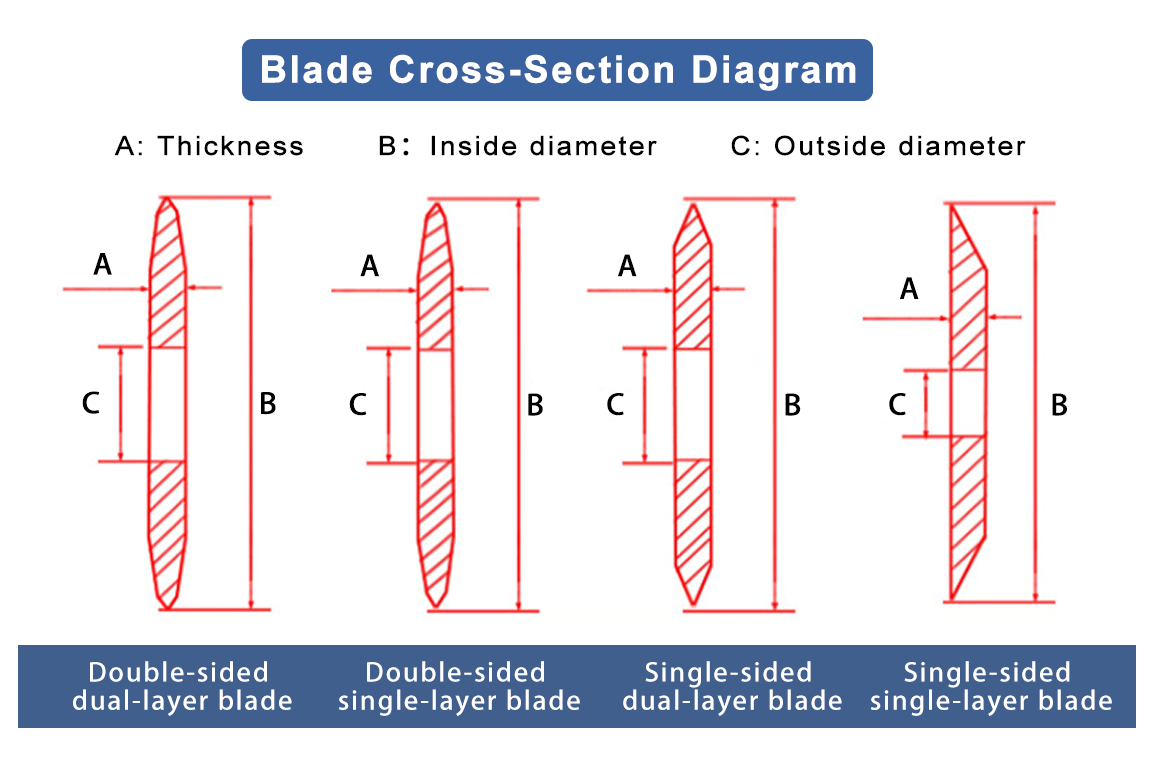
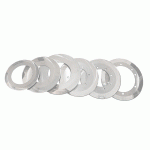
Type:This round knife has one part with a single blade and another part with a double blade (two-sided blade). Please make your choice based on the actual usage.
Features: High hardness, high wear resistance, excellent thermal stability, high-precision cutting, high strength and toughness, chemical inertness
Technology:
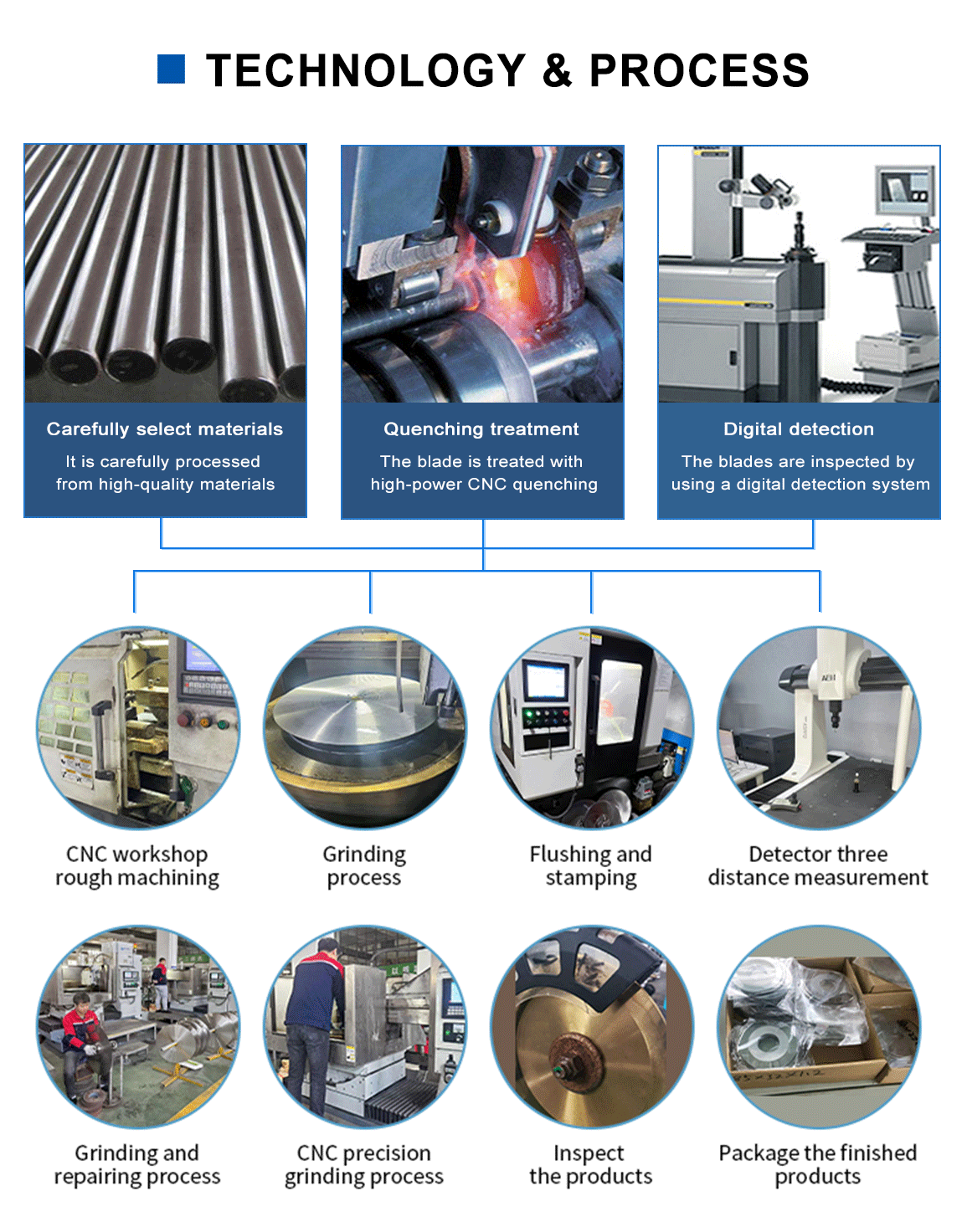
- Powder metallurgy: This is the core process for manufacturing hard alloys, involving steps such as mixing, pressing, and sintering.
- Precision Grinding: Utilizing a CNC grinding machine to perform high-precision grinding on the cutting edge, ensuring dimensional accuracy and surface finish.
- Coating treatment: Some of the blades will be coated with materials such as TiN (titanium nitride) and TiAlN (nitrogen aluminum titanium) through PVD (Physical Vapor Deposition) technology to further enhance their wear resistance, lubricity and anti-adhesion properties.
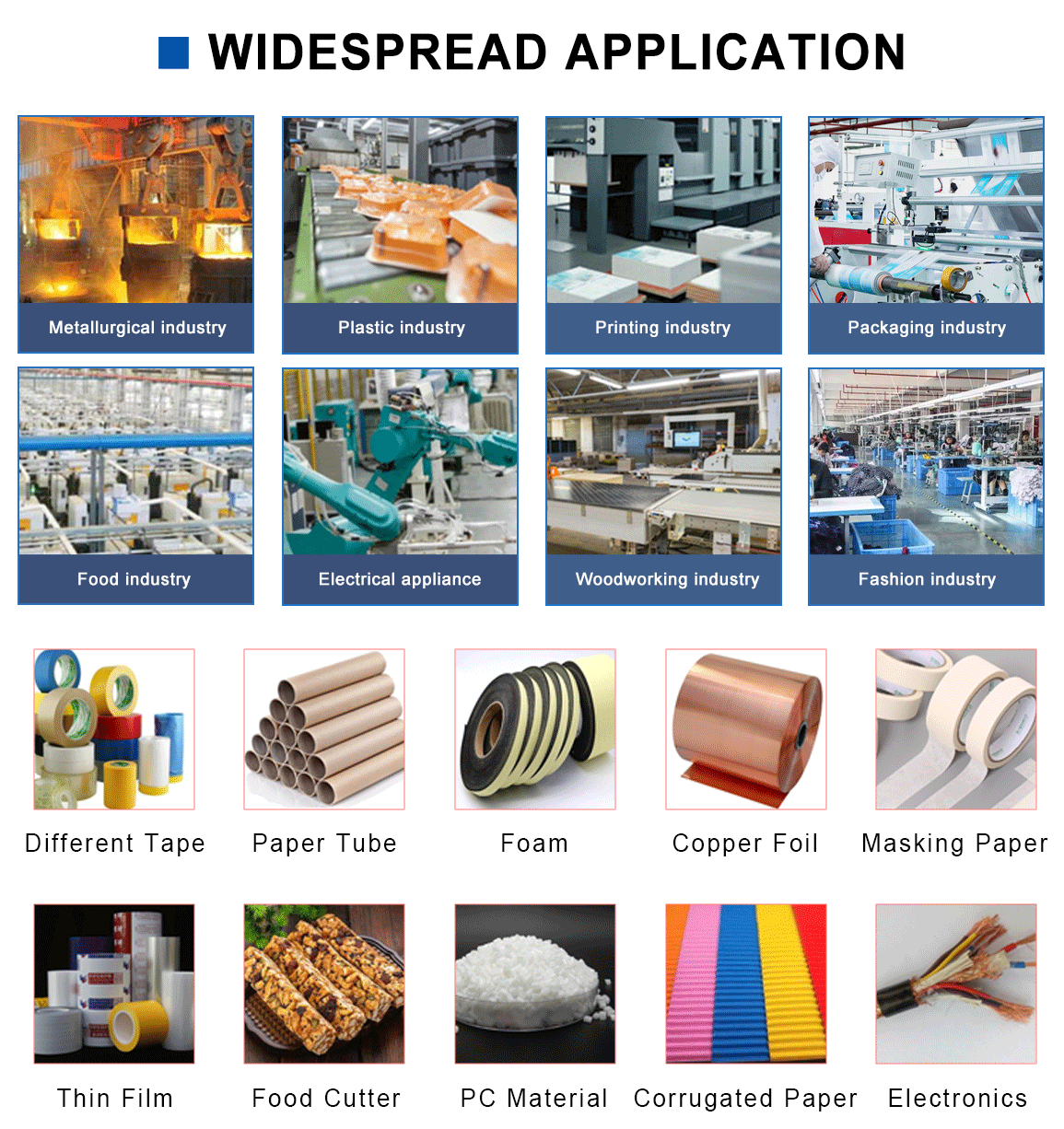
Application Scenario: Tungsten steel round blades are widely used and cover almost all industrial fields that require precise cutting and processing:
- Paper processing and printing industry: Used for cutting various thicknesses of paper, cardstock, corrugated cardboard, etc., to ensure neat cuts without burrs, suitable for book binding, paper box production, etc.
- Plastic and film industry: Cut plastic films (such as BOPP, CPP, PET), composite films, plastic bags, etc., requiring sharp and wear-resistant blades.
- Metal processing industry: Particularly skilled in cutting metal foil materials, such as gold, silver, copper, aluminum foil, etc., as well as making longitudinal cuts and striping of metal coils, requiring high precision and cleanliness to avoid indentation.
- Food processing and packaging: Used for cutting food packaging materials or directly handling certain foods (such as pastries, meat, vegetables), as it meets the requirements for corrosion resistance and hygiene.
- Textile and leather industry: Used for precise cutting of various fabrics, non-woven fabrics, leather, etc., requiring smooth cuts to avoid wire-like protrusions or indentation of the materials.
- Electronics industry: Used for V-CUT processing (opening V-shaped grooves) of printed circuit boards (PCB) and precise cutting of electronic components.
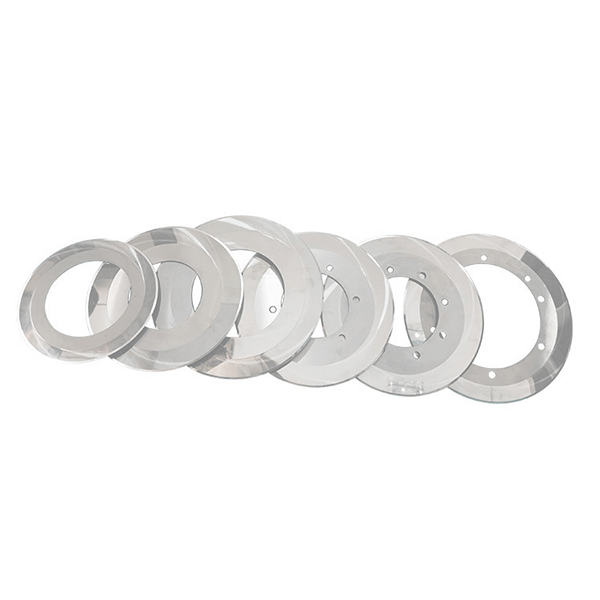
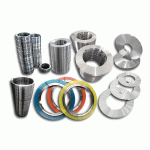
Introduction To Other Blade Types:
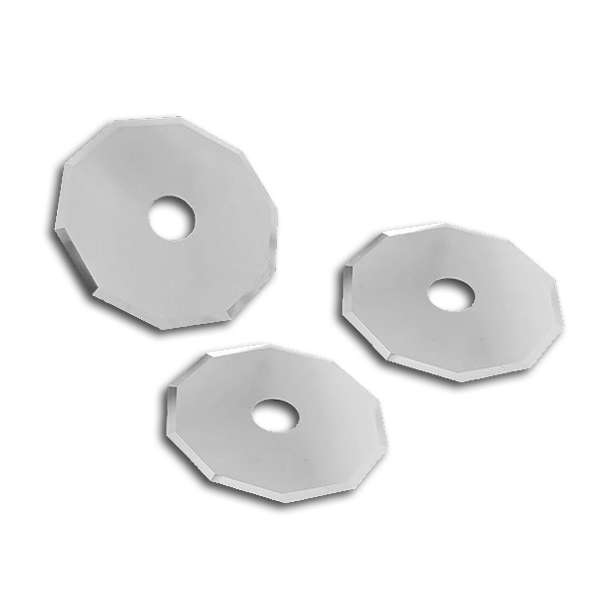
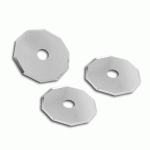
Tungsten steel ten-sided knife: With a unique ten-sided structure, each side can be used as a cutting edge, equivalent to 10 single-edged knives. It has a high utilization rate and a low replacement frequency.
It is widely used in the precise cutting of flexible materials such as clothing and textiles (fur, plush, non-woven fabric), packaging materials (film, aluminum foil), and home decoration (carpet, wall fabric).
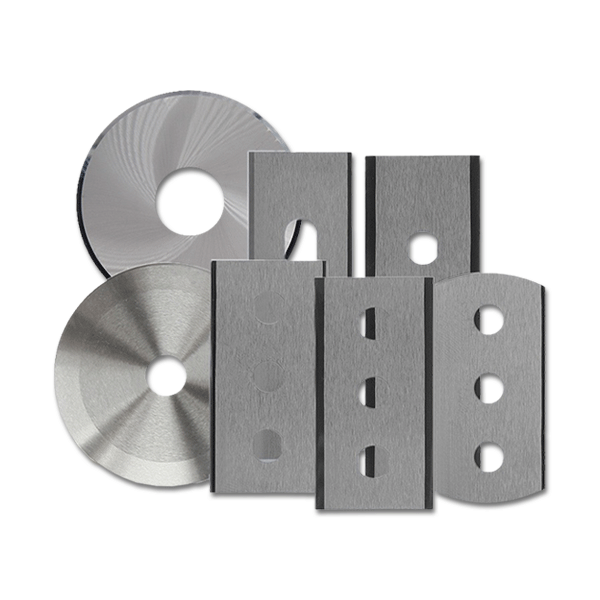
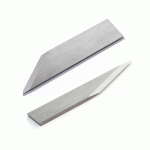
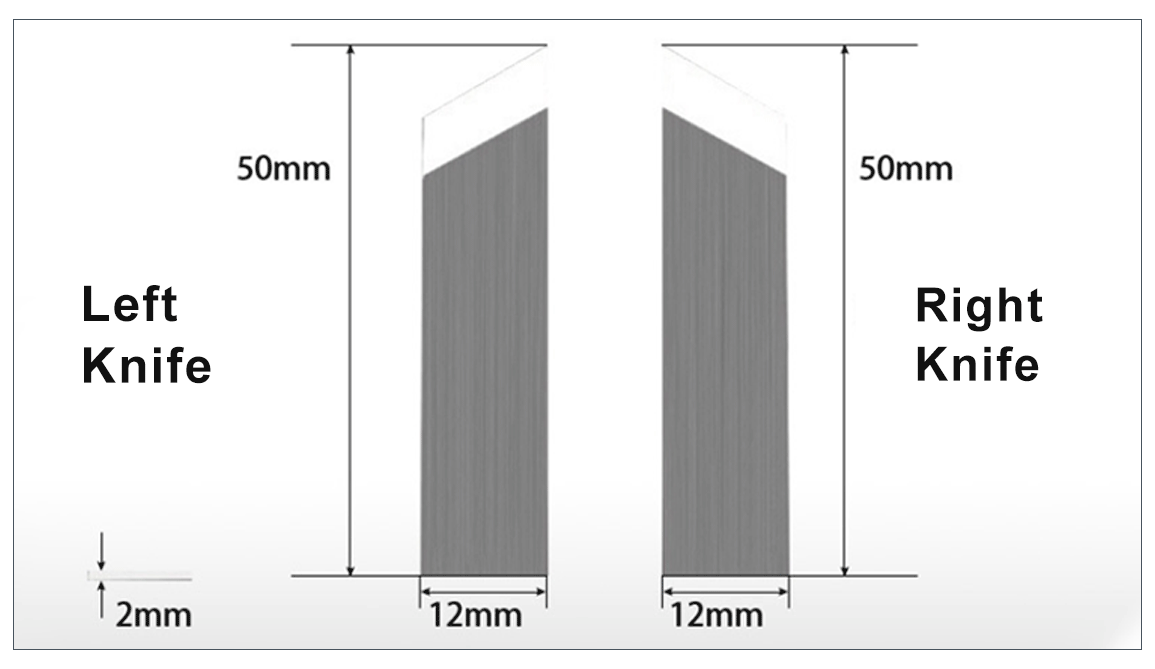
Tungsten steel slotting blade: It is usually designed with two pieces on both the left and right sides to form a pair, ensuring the symmetry and accuracy of the slotting. It has high hardness and good wear resistance, with a mirror-polished cutting edge. It is mainly used in the packaging industry (such as gift boxes, paper box slotting), the printing industry (such as hardcover book covers), and the woodworking industry (such as density board, ash board slotting), etc.
Tungsten steel metal foil cutting blade: Specifically designed for ultra-thin and ultra-precise metal foil cutting. The blade is required to be extremely thin (some with a thickness of only 0.2mm), with extremely sharp edges and extremely high precision to avoid material indentation and burrs.
It is used for cutting precision metal foils such as gold foil, silver foil, copper foil, aluminum foil, as well as high-end tapes.
Tungsten steel V-CUT blade: Specifically designed for cutting V-shaped slots on PCBs (printed circuit boards). It has a large number of teeth, ensures precise processing, has high surface finish, and does not deform.
The V-shaped slot processing of the PCB board makes it convenient for subsequent breaking and splitting.
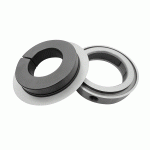
Tungsten steel three-hole blade: The blade has three installation holes, suitable for specific cutting machines (such as some imported models). The material can be tungsten steel or carbon steel. The tungsten steel three-hole blade is more wear-resistant and has a longer lifespan.
It is widely used in the cutting of tapes, plastic films (such as pearlescent films, heat insulation films), foil materials, as well as injection molding and synthetic fiber production, etc.
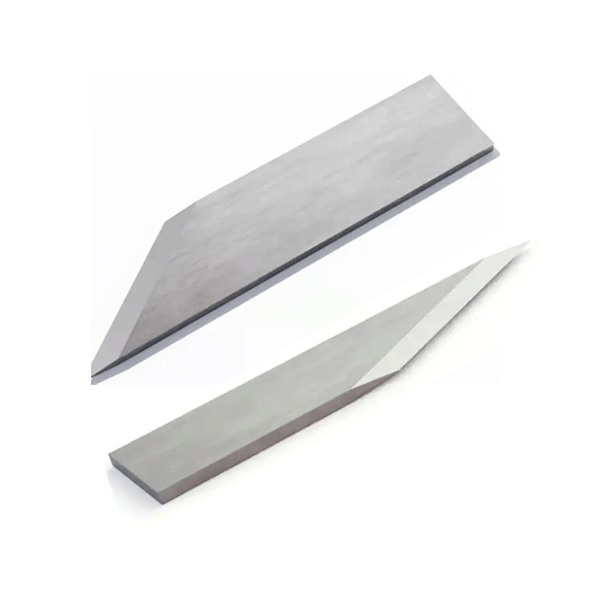
Tungsten steel half-section blade: A special-sized blade, commonly used for specific narrow spaces or shallow cutting operations. High precision, suitable for semi-sectional and full-sectional cutting.
Applicable industries: Paper, paper product processing, tape products, films, wires and cables, rubber, aluminum foil, non-manufacturing fabrics, composite packaging materials, chemical fibers, telecommunications and electrical products, cigarettes, leather, printing, food and clothing, etc.
Selection criteria:
- Select materials based on the application: For cutting common paper and plastic films, you can choose YG-type alloys which offer good cost-effectiveness; for cutting materials with high fiber content or those prone to sticking to the blade, consider using coated blades; for cutting metal foils or PCBs, it is necessary to select specialized blades with high precision and mirror-like edges.
- Select the specifications based on the equipment: Ensure that the diameter, hole size, thickness, etc. of the blade are compatible with your cutting machine or processing equipment. For example, a three-hole blade needs to match the model that supports three-hole installation.
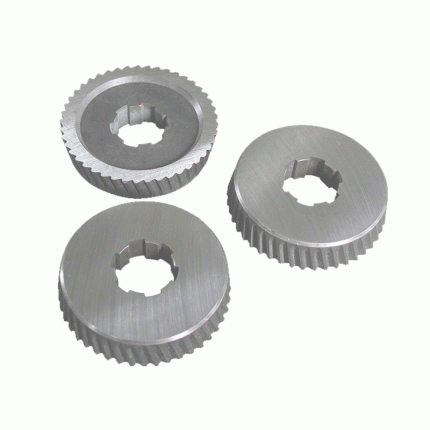
- Blade type: Flat blade is suitable for most flat cutting; Toothed blade helps reduce cutting resistance and prevents material from sticking or shifting.
To quickly compare the primary materials we offer, here is a summary table:
| Material Type | Typical Hardness (HRC) | Key Advantages | Limitations | Ideal For |
| High-Speed Steel (HSS) | 60-68 | Excellent toughness, good wear resistance, cost-effective. | Lower wear resistance than carbide, requires more maintenance. | General-purpose metalworking, woodworking, plastic cutting. |
| Tool Steel (e.g., SAE1095) | 58-62 (Hardened) | High strength, excellent wear resistance, good sharpness. | Less resistant to high temperatures than HSS or Carbide. | Springs, hand tools, scrapers, industrial cutters. |
| Carbide / Tungsten Carbide | 60-65 (Blades) | Exceptional hardness & wear resistance, high heat resistance. | Brittle, higher cost, complex manufacturing. | Hard materials, abrasive non-ferrous metals, high-volume production. |
| Stainless Steel | Varies (e.g., 420, 440) | Excellent corrosion resistance, durable, hygienic. | Generally not as hard as tool steels or HSS. | Food processing, medical instruments, wet environments. |
| Ceramic | N/A (Extremely Hard) | Superior edge retention, corrosion resistance, hygienic, lightweight. | Fragile, limited cutting capacity, higher cost. | Precision cutting in specific industries (e.g., textiles, packaging). |
We Are Here to Help: Choosing the right material is complex. As a factory, we have the expertise to guide you. We offer custom blade solutions and can advise on the optimal material, heat treatment, and geometry for your specific application.
Contact us today for a personalized recommendation and quote. Let our manufacturing expertise solve your cutting challenges.
Related products
High-Hardness Metallurgical Steel Rolling Knife Yuxin Oem For Industrial Manufacturing
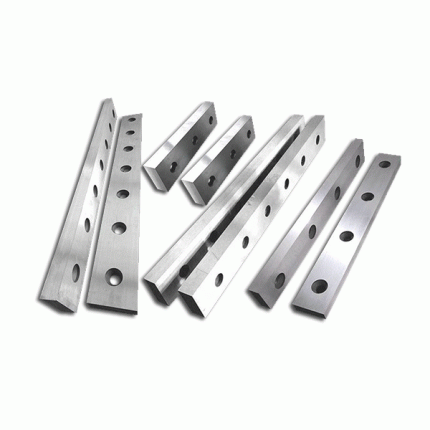
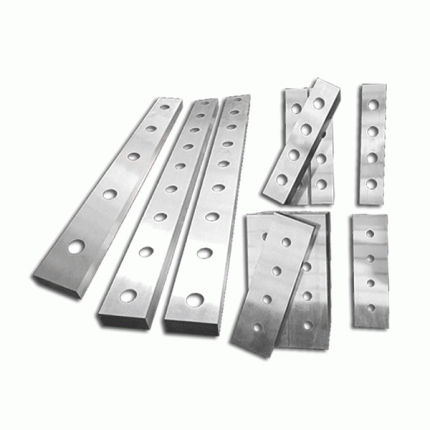
Metallurgical steel rolling blades are the core tools used in the steel industry for rolling, shearing and splitting steel strips. They are known as the "sharp teeth" for steel forming. By means of the moving upper blade and the fixedl lower blade, with a reasonable blade gap, they apply shear force to various thicknesses of metal plates, causing the plates to break and separate according to the required dimensions. They have extremely high requirements for hardness, wear resistance and heat resistance.
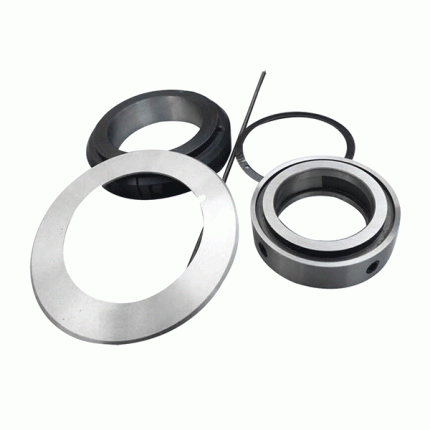
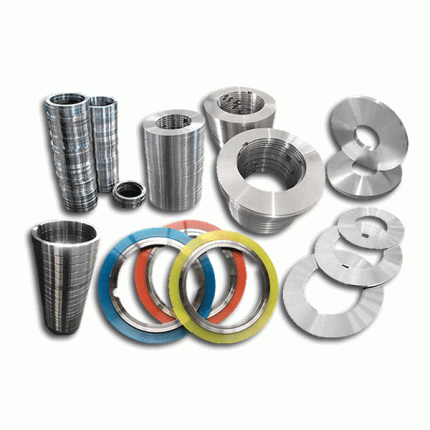
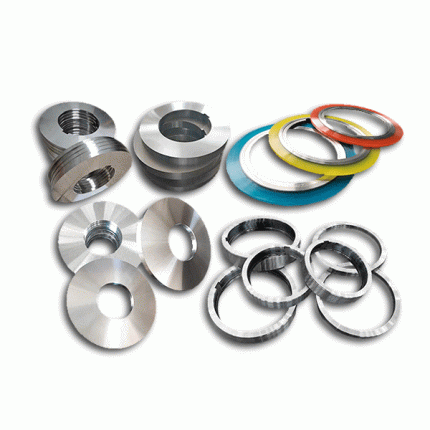
Precision Rotary Shear Knife Circular Slitting blade Used for metal processing
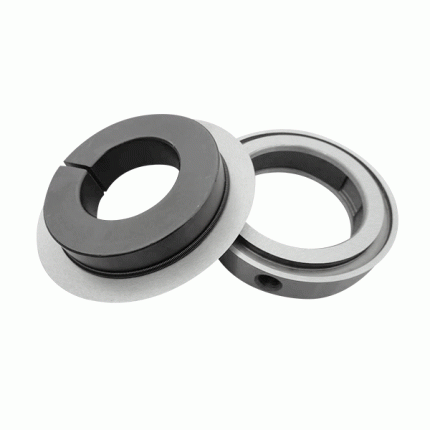
The Rotary shear blades , also known as the strip divider blade or the rolling shearing machine blade, is the core cutting tool for the thin sheet metal shearing process. Through the rotation and shearing of the upper and lower blades, wide rolls of material can be precisely cut into narrow strips of specific widths. They are usually composed of three parts: the blade, the spacer sleeve, and the spacer ring. Their diameters range widely, from 100mm to 2000mm, to meet different processing requirements - larger diameter blades are mostly used for heavy-duty sheet metal processing, while smaller diameter blades are suitable for precise cutting. They are widely used in metal processing, automotive manufacturing, and electronic and electrical industries.
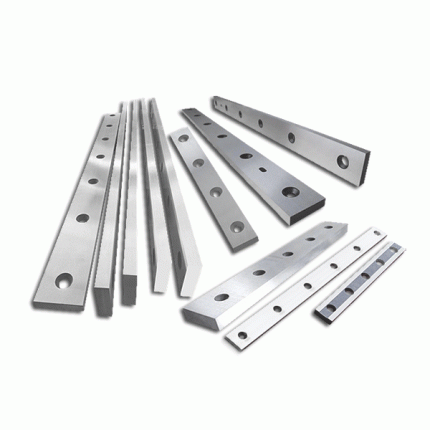
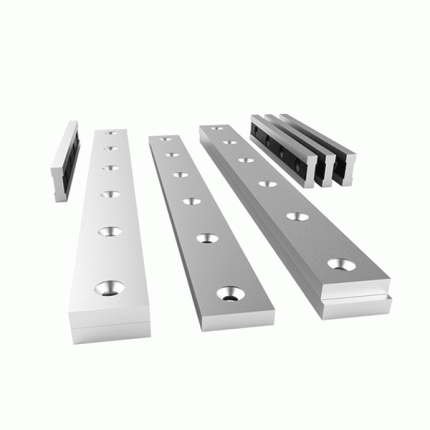
Steel Plate Shearing Machines Blades Manufacturer for Metal Guillotine Long Knives
The shearing machine blade is the core cutting component of the shearing machine, consisting of an upper blade (moving) and a lower blade (fixed). By adjusting the blade gap reasonably, it applies cutting force to the metal sheet to achieve precise cutting of straight edges. Its working principle is based on the mechanical structure of forging machinery and is widely used in industries such as light industry, aviation, shipping, metallurgy, electrical appliances, and stainless steel products.
Reviews
There are no reviews yet.